1000 are on the way

I just received an email from Hornady.

My 1000 free 9mm 115 grain FMJ bullets, obtained as part of a special promotion when I bought my Lock-n-Load AP, are apparently on their way. Awesome!

Hornady still has the promotion, but this year it’s only 500 bullets. Still it’s a nice promotion.

I was about to start on my 9mm reloads with the Berry’s bullets but I may hold off a bit and wait until the Hornady bullets come in and tinker with them both at the same time. Whee!

Utah permits in Texas? Bad idea.

In the January 2010 KR Training newsletter, Karl writes about Texas residents obtaining Utah concealed handgun permits. It’s such a good post that the message deserves to be spread.

I’ve had several conversations this month with students that were considering, or have gotten, Utah carry permits as a way to carry in Texas without “going through the hassle” of getting a Texas permit. The Utah class is shorter in length and the fees are cheaper. Reasons getting a Utah permit is a bad idea:

1) You will be arrested by Texas cops and tried in Texas courts when you violate Texas gun laws. Ignorance of the law is no excuse. Going to court is a far bigger “hassle” than sitting through a Texas CHL class.

2) The cop that pulls you over may not be familiar with the “loophole” in Texas law that allows residents to carry on non-resident licenses…so you may end up getting hassled on the side of the road.

3) Your money and your data go to another state. If everyone in Texas got Utah permits, it would appear that no one in Texas carries. That would significantly weaken the power of our lobby with the Legislature. Sending your CHL money to Utah helps Utah, not Texas.

I have a fundamental problem with people that think that training to be well prepared for a life-or-death situation, including learning the details of relevant state laws, is “a waste of time”.

I’ve also been told by some potential students that they want a Utah permit so that they “won’t have to tell cops I’m carrying when I’m pulled over”. This requirement was removed from Texas law during the last legislative session, and even when it was required, it was not a significant problem for permit holders. The success of the Texas CHL program is due, in part, to the support Texas CHL holders have received from law enforcement agencies in Texas, and DPS specifically. Our Texas CHL system works, and we have been able to adjust it to make it better for permit holders since its inception. “Cheating the system” by opting for a Utah permit is the wrong thing to do, and I encourage those that have Utah permits (and not Texas permits) or those considering this option to do the right thing for your own education and for gun rights in Texas by getting the Texas CHL.

KR Training January 2010 Newsletter

The KR Training 2010 newsletter is now posted.

It contains usual things, like upcoming classes. But there’s also a great deal of useful information in there, from information about the Austin Gun Show controversy, the Ft. Hood shootings, iPhone apps, and more.

Also some excellent video:

Updated: removed the video, since they didn’t allow embedding it. Well, click through to the KR newsletter and you can find the URL for it. The Rogers stuff is pretty wild.

Rambling about reloading

Helping myself remember what I’m doing with my reloading.

.223 Remington

Still haven’t gotten to the range to do my Varget testing. It’s CCI #41 primer, case length 1.750″ (used Remington brass, trimmed and prepped), Barnes TSX .224″ 62 grain, COAL 2.250″. Using Varget, and loaded 5 rounds each starting at 25.1 grains up to 25.6 in 0.1 grain increments (30 rounds total). The goal is to shoot 5 shot groups of each charge weight and see how they perform in terms of accuracy. Whichever proves to be most accurate out of my rifle is what I’ll settle upon, load up a bunch of, get some chronograph readings, zero the scope, and move along.

.38 Special

I bought some brass off a guy and loaded a couple hundred more rounds before I switch over the Lock-n-Load AP press. I should have more than enough ammo for the snub class next month, but I’m still waiting on requirements.

One thing I noticed is I think my last round of loads crept up to 3.7 grains of Titegroup, which is more than my normal recipe. It may explain why the last time I shot them it felt a wee snappier. When I reloaded the last couple hundred rounds I rechecked the power drop to ensure 3.5 grains. When I next go to the range I want to take some of both batches of reloads and try them out.

If all is right in the world, I’ll be done loading .38 for a while… tho something just now nags at me that it’d probably be worthwhile to load a couple hundred more before I change the press.

9mm

Because once I switch the LnL press over to 9mm, I’ll be there for a while. I need to load at least 2000 rounds.

My last round of 9mm used Berry’s 115 grain RN DS, 4.2 grains Titegroup, Winchester WSP standard small pistol primers, various used brass, and a COAL of 1.135″. The load turned out to be too wimpy, the guns almost not running. Looking at load data, I think 4.4 or 4.5 grains ought to do it. I have to be mindful because these Berry’s bullets really can’t go over 1200 fps and 9mm pushes towards that end. But again, looking at published data I think 4.4 or 4.5 will work OK. Oh, and I will be using different primers because that’s what I have. Hopefully won’t make too grand a difference.

Overall

I think I’ll do a couple hundred more .38 just to have a buffer because once I set up for 9mm I really won’t want to change back until I’m done. Then I’ll set up for 9mm using the above, load maybe 20 rounds as an initial experiment. Then, I’ll take all 3 sets of loads and 3 guns to the range and try everything out: the .223 Varget different charge weights, the .38 loads, the initial 9mm load. See how everything does. If all is good, probably take care of the .223 loads to put them to bed, then get rolling on the 9mm.

I just need a little more time in a day. 🙂

.380 semi-autos – no thank you

American Rifleman magazine looked at a group of .380 semi-automatic handguns. The results were less than impressive.

They looked at:

  • Walther PK380
  • Taurus 738 TCP
  • Sig Sauer P238
  • Rohrbaugh R380
  • Ruger LCP
  • North American Arms Guardian
  • Magnum Research Micro Desert Eagle
  • Kel-Tec P3AT
  • Kakr P380

The bottom line? None are that great. The Rohrbaugh seemed to perform best, but it’s incredibly expensive and still suffers from the limitations of the platform. The rest all experienced reliability issues and malfunctions. They are unpleasant to shoot, and you cannot shoot them very well due to short sight radius (and perhaps no sights at all), long and heavy and ugly triggers, can’t get all your fingers on the gun to control it, and being so lightweight they don’t absorb much recoil (so you get to). I will caveat that in saying most self-defense shootings occur from 0 to 5 yards, and as reported these guns will provide acceptable accuracy at such distances.

What gets me the most is reliability. Most self-defense shootings are going to require more than one shot to be fired, and if the gun can’t reliably function and feed? To me, that’s unacceptable. I can accept a crappy trigger, I can accept a lack of sights, I can accept poor accuracy… all those things can be worked with and in most self-defense situations you’ll probably come out OK. But if the gun won’t work at all, sorry… that’s beyond epic fail. Yes, many people talk about break-in periods, doing fluff-and-buff’s, how their gun worked great right out of the box. But the reality is, most people buying a gun for self-defense aren’t “gun nuts” that are happy to run thousands of rounds through the gun, know what “fluff and buff” means, or would find much sense in buying a gun then having to send it off to a gunsmith to make it work. They want to buy it and expect it to work out of the box. You buy your TV, you expect it to work when you get it home. You buy a car, you expect it to work when you drive it off the lot. So if they buy a gun, they expect it to work out of the box no different than any other product they buy. While yes many of the above guns can and do work, that there’s enough report, experience, and evidence of problems to cast doubt on their reliability well…. it’s not like you hear of Glocks spoken of in this same way, do you?

The simple fact these guys are unreliable, require a lot of care in ammo selection, require a lot of break-in… and if they’re just not fun to shoot are you going to shoot them and practice with them? Just makes it hard to want to recommend one of them. Everyone’s situation is different, just be sure you have a realistic understanding of what you’re getting here.

Self Defense Maxim? Maximize Beer & TV Time.

I was reminded of this one a couple days ago.

I believe it was Greg Hamilton of Insights Training that said your choice in how to behave in a self-defense situation, often involving the question if you should get involved, if you should draw your gun, etc., should be based around your ability to maximize your beer and TV time.

Let’s say you’re at home. You hear a noise outside and see someone breaking into your car to steal your stereo. Even if your local laws would allow you to go out there and use (deadly) force to defend your property, is that the best course of action? Perhaps. According to the maxim, perhaps not. If you ran out there with a baseball bat or with guns blazing, you might stop the theft. You might end up with a lot of bullet holes in your car, which now you have to repair (and explain). You may end up with a mess of a legal situation on your hands (look at Joe Horn). You may end up being arrested. All sorts of things could happen that could be rather a mess to deal with. Or, you could take a picture or video, get a description of the perp, if they’re in a car perhaps describe it and get a license plate number, and report it to the police. You do have insurance on your car for just such an occasion. And then, you can go back to watchin’ the game havin’ a Bud.

Let’s say someone comes up to you and your wife on the street. They ask for a cigarette, you don’t have one. They glance around, then out of nowhere they grab your wife and someone else comes out of the shadows to grab you. Yeah, you probably want to draw your gun… because coming out of this alive instead of being found dead at crime scene #2 is probably what’s going to maximize your future enjoyment of TV and beer.

As you think through scenarios, as you consider yourself in situation and ask “What would I do?” “Would this be the right place to act in such-and-such a way?” consider using the ability to maximize your TV and beer time as a guideline. It may not be appropriate in all cases, but it should help you along the decision-making process.

New Shooter Report

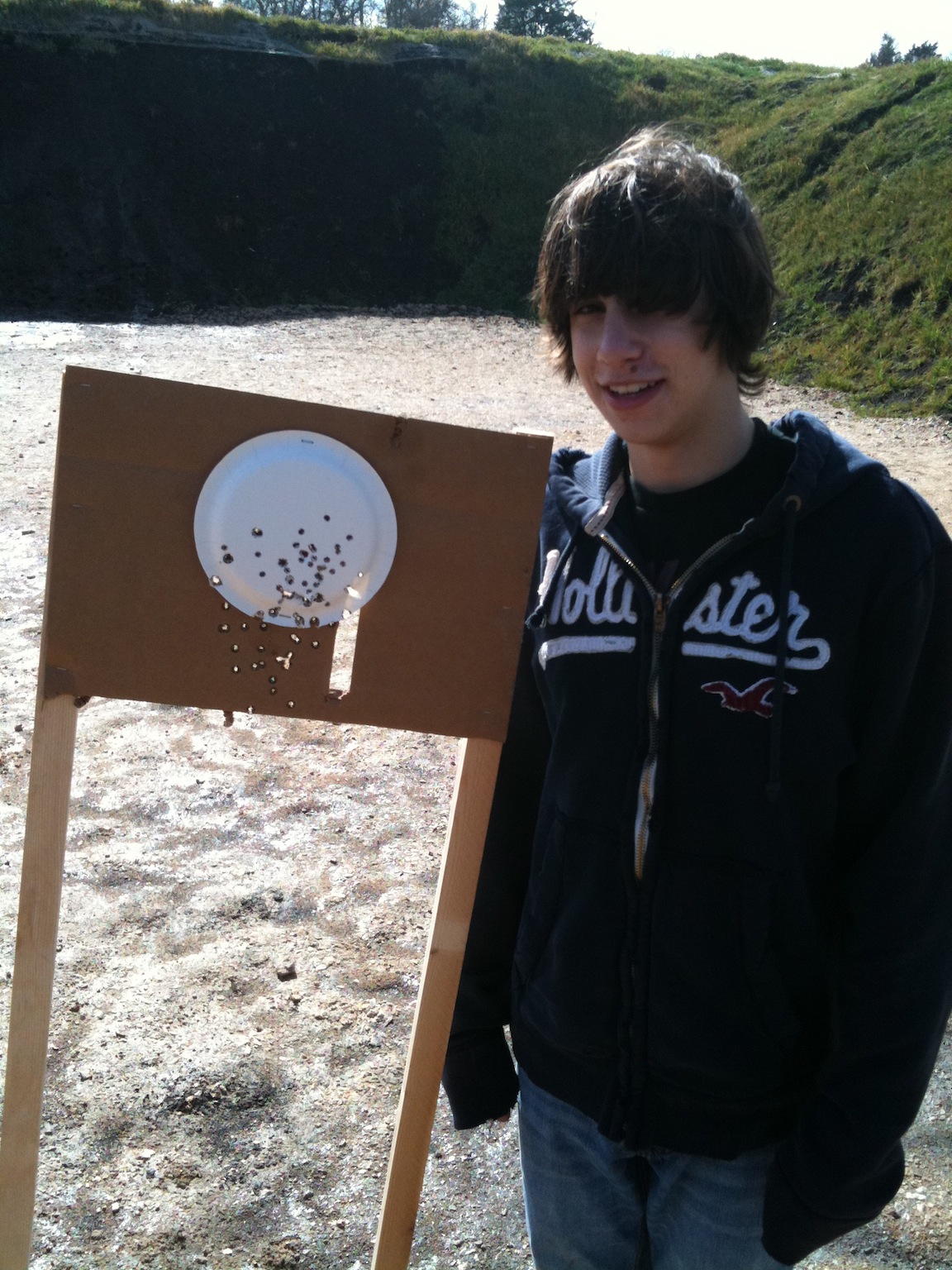
I got to spend the day doing a wonderful thing — introducing a young man to the world of firearms.

Background

Back when I studied Kuk Sool, Dusty did as well (he outranks me, been studying far longer than I). He taught me, we trained together. He’s a good man. One of his sons, Collin, just celebrated his 14th birthday. Some months ago Dusty contacted me because he knew I was an NRA Certified Instructor. As a surprise for Collin’s 14th birthday Dusty wanted to introduce his son to firearms. Why? Dusty is not against firearms; spent some time with them as a kid, but nothing serious. Dusty’s wife (Collin’s mother) is no-guns. However, she understands that guns are a reality of life. They know their son is growing older, that he’ll be exposed to more things, he’ll need more ability to make his own decisions in life. Dusty’s goal was to provide his son with some basic information about firearms, how they operate, how they function, and most of all, how to be safe with them. So I constructed a day-long course just for Collin.

The Morning
We started at my house and spent a couple hours going over the basics. I took the basic shape of the course from the NRA Basic Pistol course. Talked about safety, not just “the rules” but also things like health safety (eye and ear protection, lead exposure, etc.). Gave a basic overview of firearms and how they work using pistols but also demonstrated how different firearms worked: bolt action rifles, semi-auto rifles, pump shotgun, revolver, and so on. I wanted him to get a broad exposure today, nothing too deep other than the safety aspect.
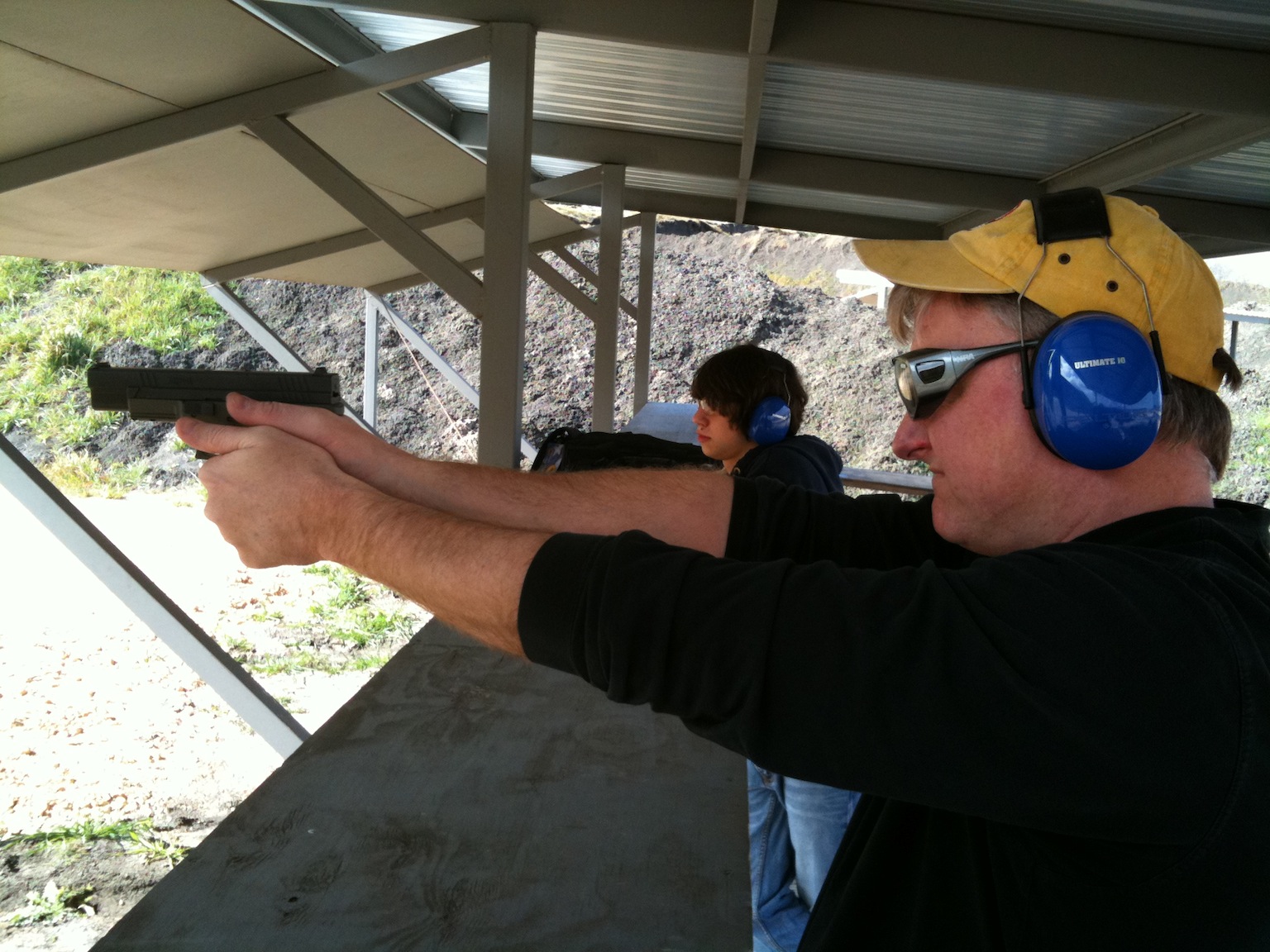
Then we worked on basic skills such as trigger control and sight alignment/picture. Stance, grip, breathing were also discussed. We worked through dry fire of the firearms using dummy ammo so both Collin and Dusty could get a feel for how each firearm worked.

It was a lot of information crammed into a couple hours, but I did sent Collin home with some NRA student booklets to help him remember and reinforce what was learned today.

The Afternoon

We loaded up the car and had lunch at Patsy’s Cowgirl Cafe. Driven by there many times but never ate there until today. Dusty bought lunch (that’s all I asked for in return). Then it was off to the Austin Rifle Club.

I’m happy for how the new action bays are assigned for us to use for I was able to do all of our shooting at 2 bays (one for pistols, one for rifle and shotgun) and very close to each other. If not for the way the actions bays are set up, today would have been far more cumbersome.
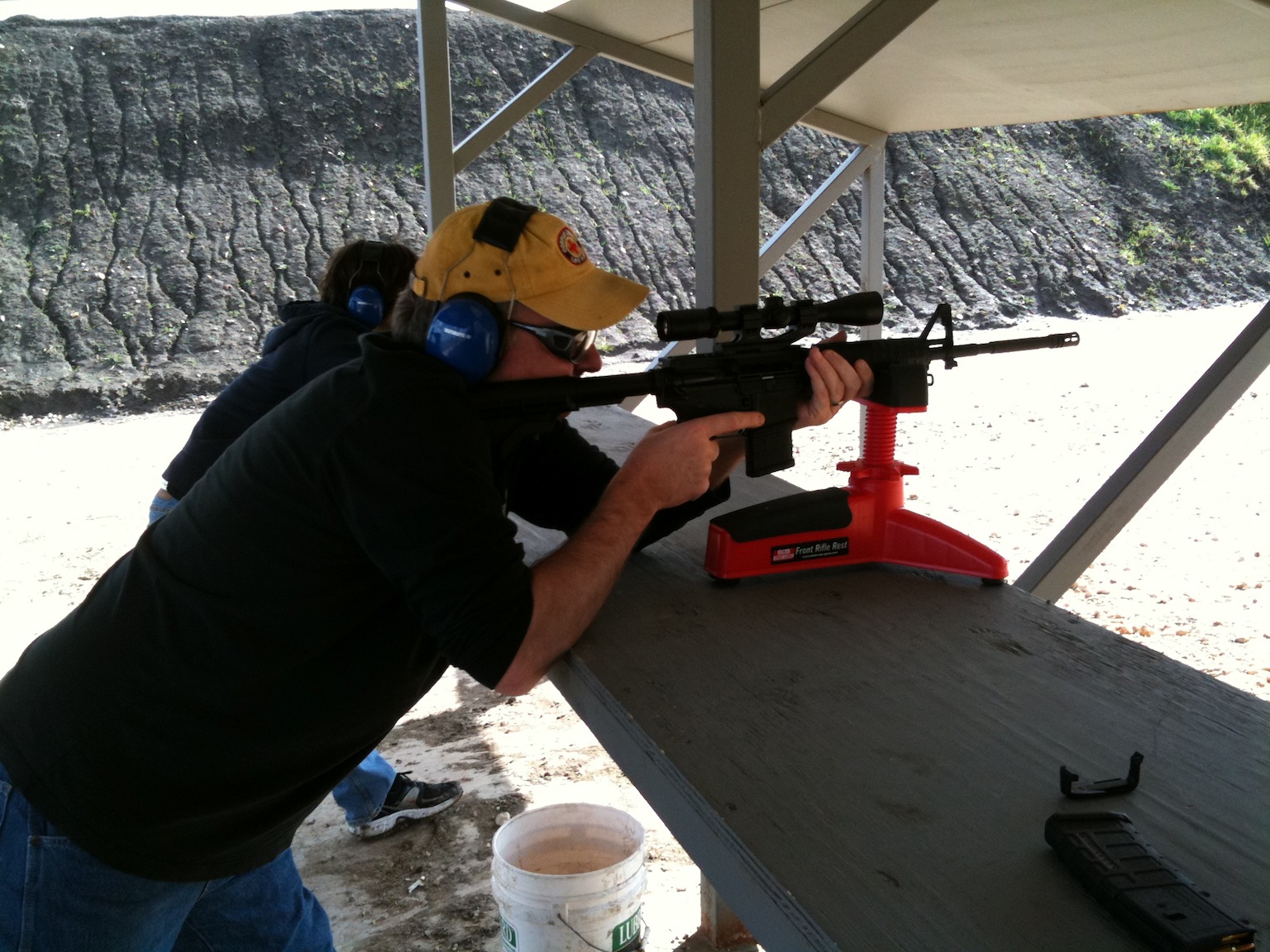
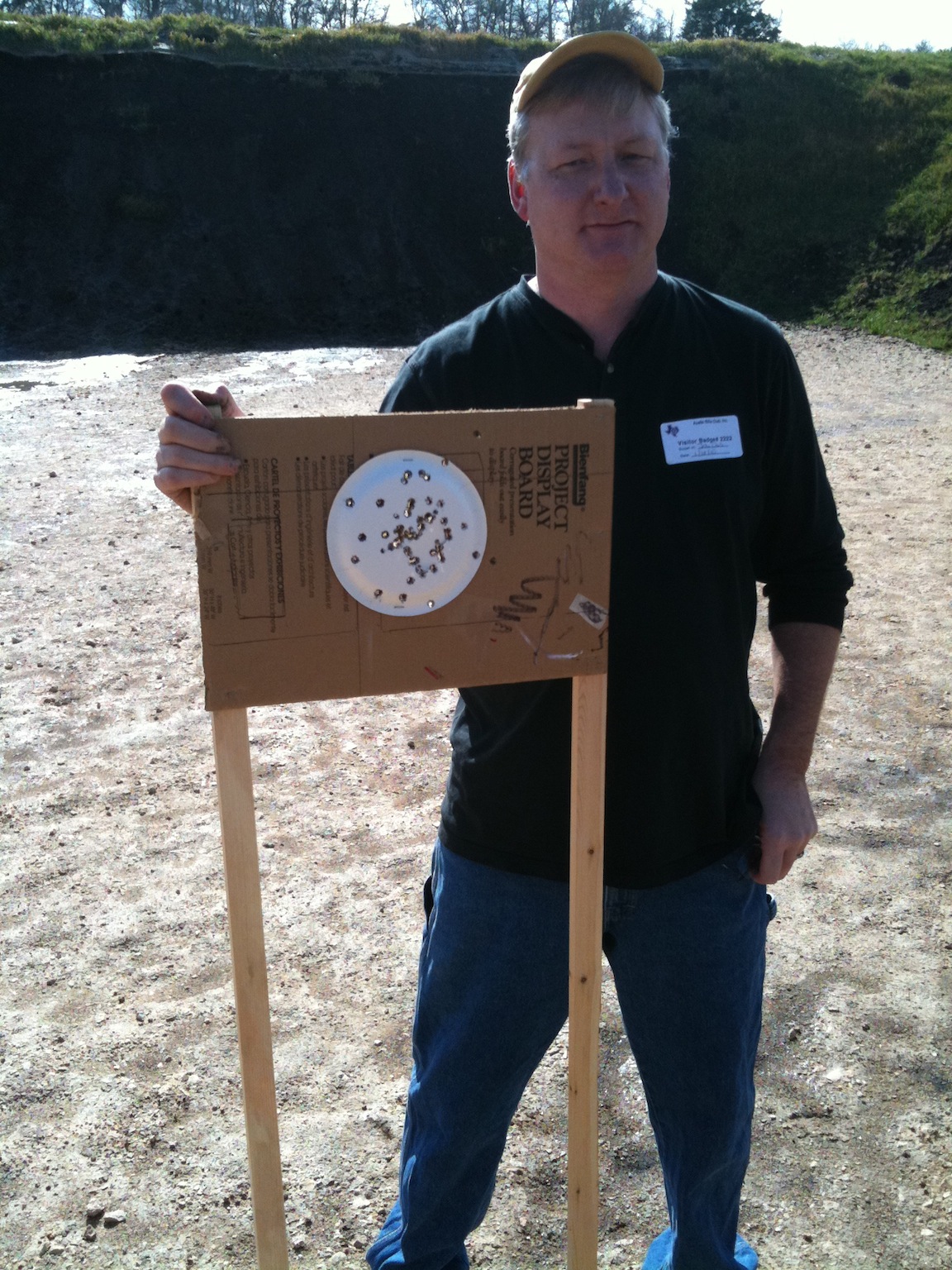
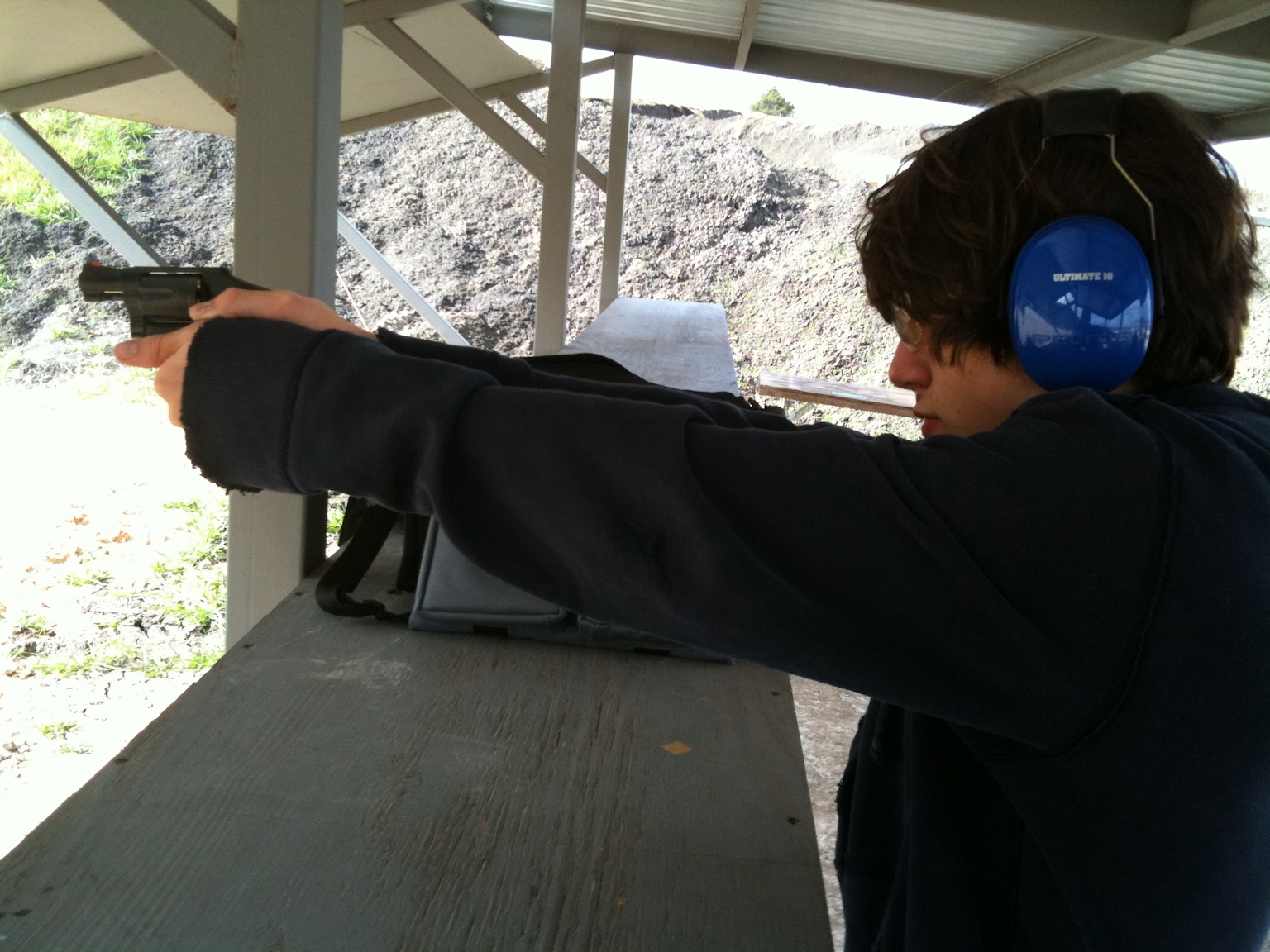
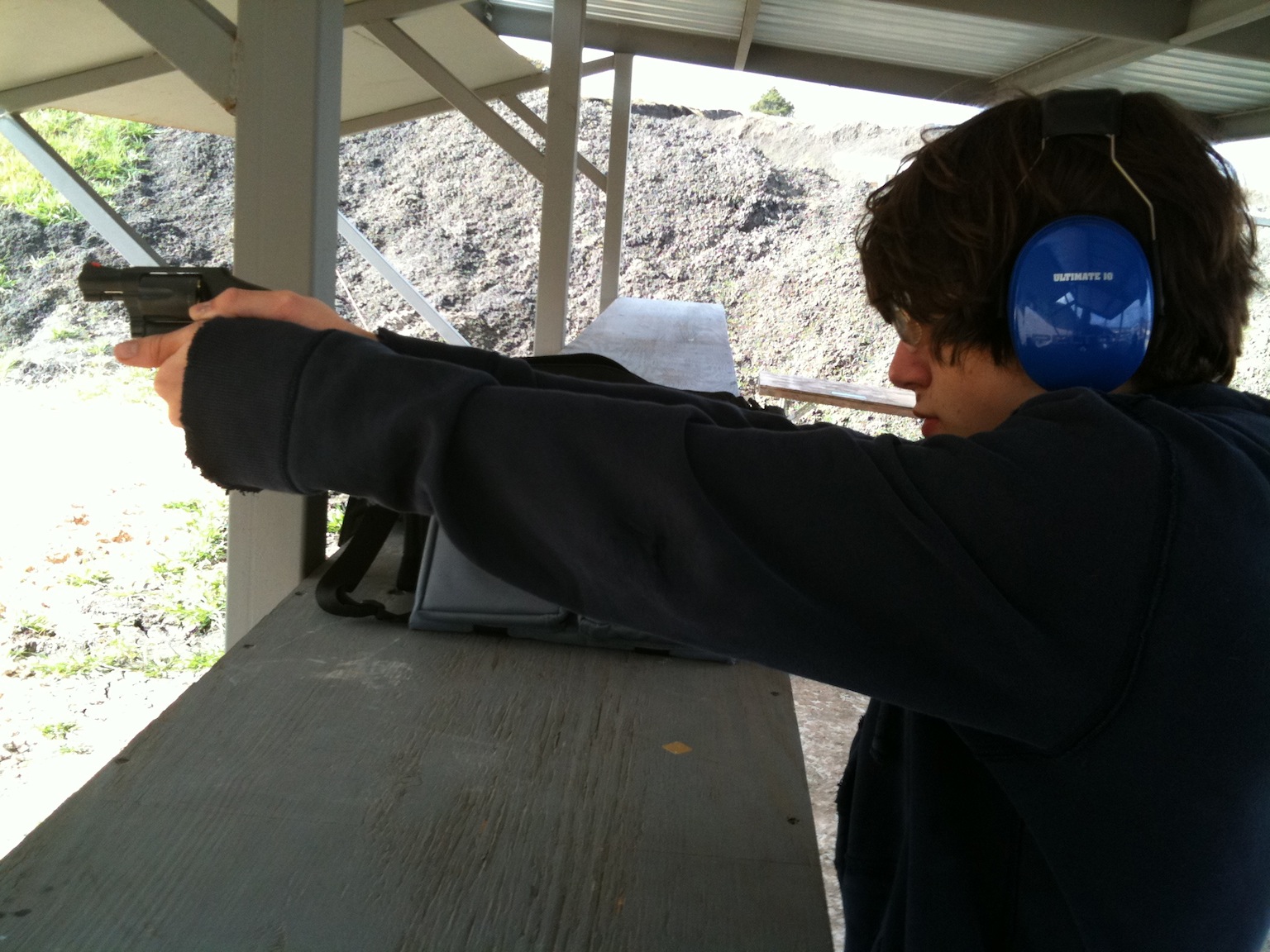
We started shooting pistols. It’s always wise to start small, light, and close. So we set up paper targets at about 7 yards. We started with a Browning Buck Mark .22 LR pistol. Every time we started a new firearm we’d ensure familiarity with the firearm itself, then load and go. Focusing on fundamentals and focusing on being safe. After the Buck Mark we went to a Springfield XD-9 Tactical (5″ barrel). This of course was a step up in recoil and noise, but certainly manageable. I also let them shoot a few out of my customized XD-9 to feel the difference. One thing they may not have consciously noticed but certainly did feel were the vast array of triggers; it’s something that will make more sense to them later on. Then we finished out the handgun shooting by shooting the Smith & Wesson 442 snub nose revolver.
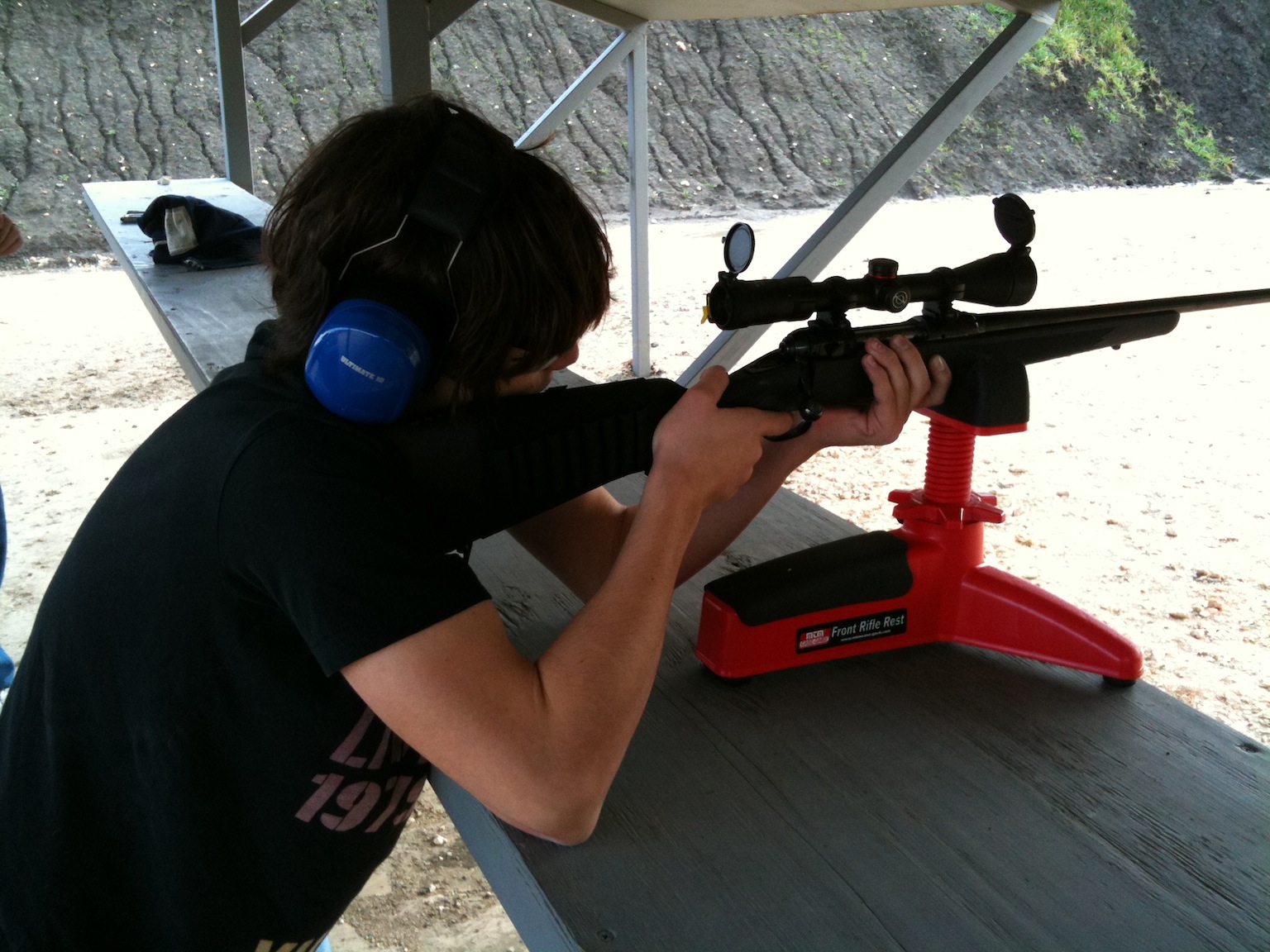
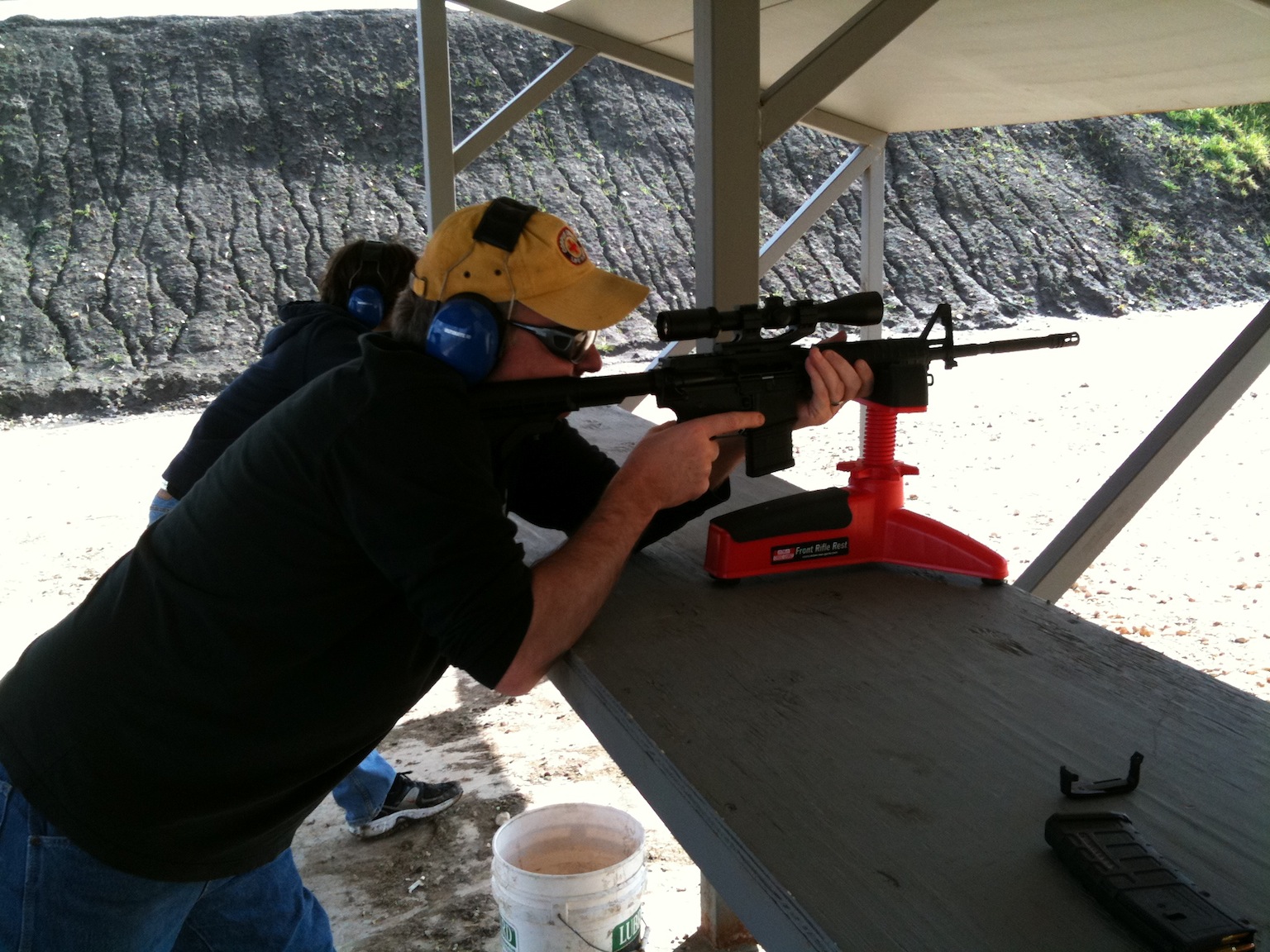
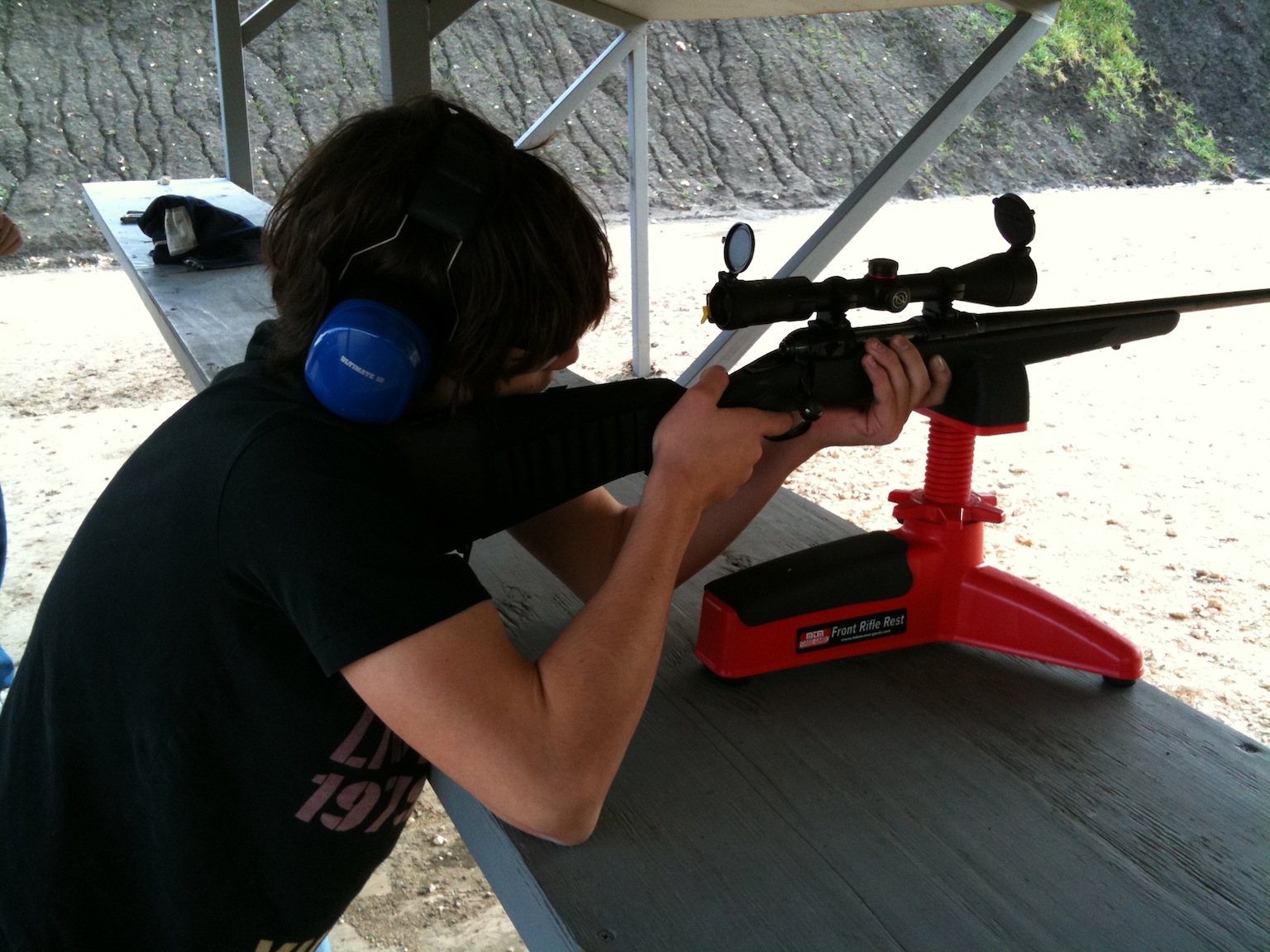
After the handguns we moved to another bay and shot long guns. Note in the pictures that they’re doing a quasi-benchrest. It’s somewhat limitations of the bay rules as well as trying to take some of the complexity out of the equation for the new shooter… go with me here. We set the targets at 25 yards. Started with a Bushmaster AR-15. More recoil, but not as much as was expected. We then moved to the Savage 11 bolt-action rifle. That had the most recoil of all so far, but it wasn’t too bad due to the excellent recoil pad. Unfortunately we didn’t get to shoot the .308 as much as we wanted because time was running tight. So we moved on to the Mossberg 500 12 gauge shotgun. Let them shoot some birdshot, then some buckshot, then some slugs. Yes, shoulders were sore and it didn’t take a whole lot. While they may have felt a lot of kick and may have a sore shoulder in the morning, the smiles on their faces were just priceless to me. Nothing like a little recoil… it’s good for you. 🙂

I asked what they liked. Seems the AR and the Buck Mark were the big winners. I can’t say I blame them, especially with the Buck Mark. That’s just way too much fun for 1 gun.
The Aftermath

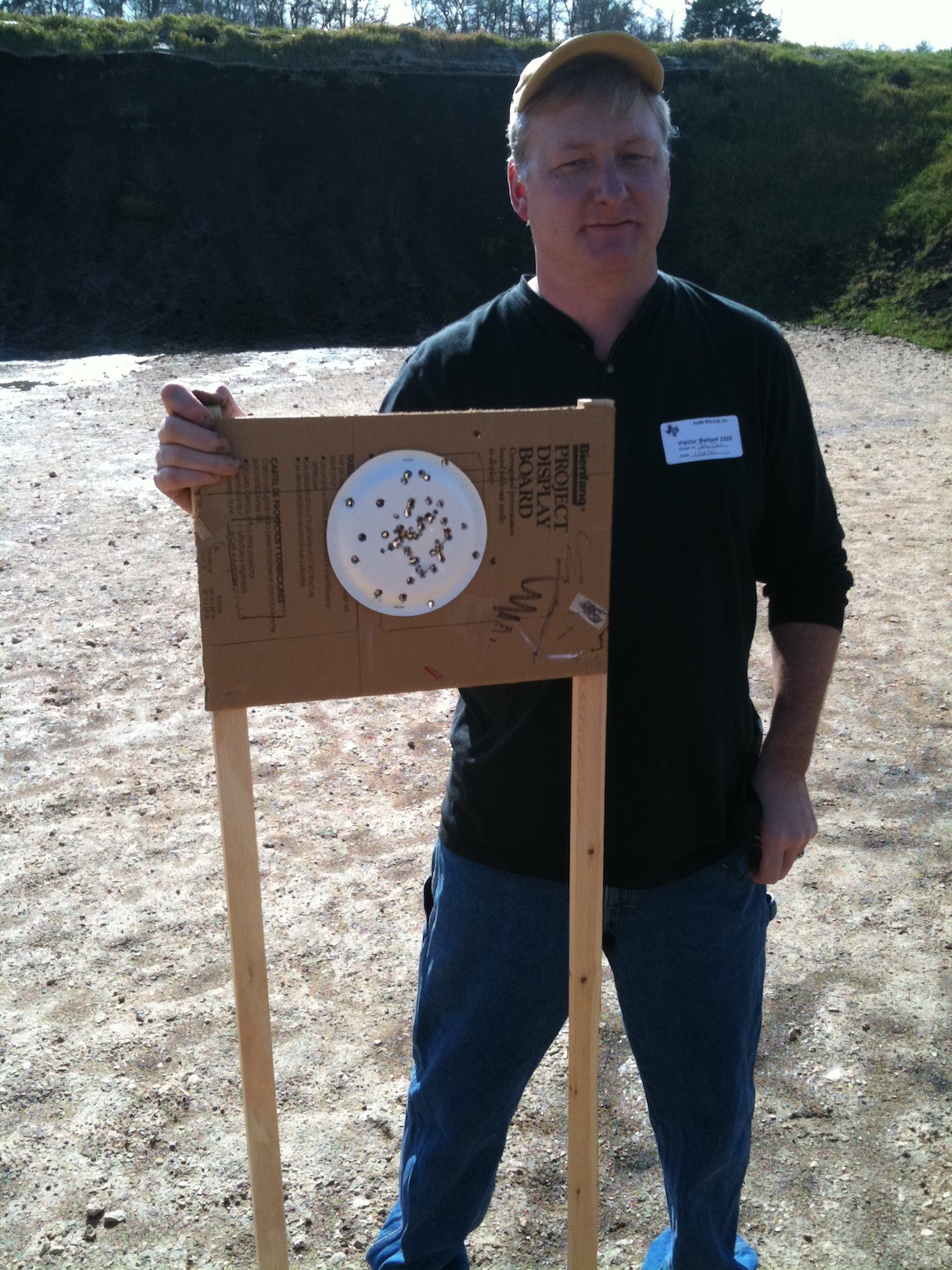
All in all, a good day. A lot was presented and a lot was done. Again, the goal was to provide a broad introduction to firearms, with an emphasis on safety with a side of fun. I know at times I rambled on and went on about things, but I love what I do and so sometimes I can go on a bit. I also know that I missed a few things… probably were some things I wanted to talk about but didn’t, I know there were some pictures I wanted to take but forgot to. If Dusty sends me some pictures, I’ll post them here.

It seems that a good day was had, and an enjoyable birthday present was given. Collin, you handled yourself quite well. For a first time shooter, you shot well. You understand the rules, now you just have to put them into practice. I can tell from the day we spent together that you’re a fine young man and have the family and foundation necessary to grow into a strong, responsible man. If I can be of help in the future, never hesitate to drop me a line.
NRA’s Personal Protection In The Home

I spent today at KR Training, taking the course to become an NRA Instructor certified to teach their Personal Protection in the Home course. From the NRA Blog:

Americans own firearms for a variety of reasons, but home defense is among the most common reasons for owning a handgun. To help handgun owners learn more about firearms and home defense, the NRA developed the Basics of Personal Protection In The Home Course. This course focuses on the safe and efficient use of a handgun for protection of self and family. Students can also learn about their right to self-defense as a law-abiding citizen.

[…]

During the eight-hour course, an NRA Certified Instructor will teach students basic defensive shooting skills, how to respond to a violent confrontation, and strategies for home safety. Specific state firearms and home defense laws are taught by an individual certified in the state that the course is taught (such as an attorney or police officer). Not sure which gun is right for you and your home? You can learn how to choose a handgun for self-defense, along with continued opportunities to expand your skills.

Although Personal Protection In the Home is considered an NRA Basic course, it’s not for beginners. In order to take this course, students must be law-abiding adults (at least 21 years) and have experience with a firearm. To learn more about the course requirements or to find an NRA Basic Personal Protection In The Home Course near you, visit NRA Education & Training or call 703-267-1481 for more information.

It’s a pretty cool course. I think there’s a lot of good material in here that goes beyond your basic “how to shoot a firearm”, which NRA First Steps and Basic courses are about. My understanding is this course was developed to help with concealed handgun license requirements in some states. What’s good about the class isn’t just that it teaches how to shoot, but it works to address realities about self-defense shooting such as the legal matters and what your personal response may be (e.g. emotional and psychological impacts). A combination of Jeff Cooper and Massad Ayoob.

Much of this material I already know from taking other training courses. But to obtain the certification is certainly a good thing.

We also had a little extra fun in the class. One of the parts of the course is educating students about shooting opportunities, such as IPSC and IDPA action pistol shooting. So to expose folks to that, one IDPA course and one IPSC course were set up. Much fun to shoot that.

A good day, especially since much of it was spent on the range. Weather was perfect. Life is good. I just need to complete the exam and submit the paperwork to make my certification final.

This isn’t right

17-year-old goes hunting before school. Doesn’t want to be late, so he leaves his shotguns in the car and parks off campus. Still gets expelled from school “claiming he was a danger to himself and other students.” Story here.

[Susan] Parisio said it’s an important distinction that her son’s truck was parked on a public street. “I asked the police and the district attorney’s office if he did anything wrong and they said no,” Parisio said.

However, school officials disagreed. They told Parisio state law gives them “the right to search any of the student’s vehicles no matter where they’re parked or what they’re doing during school hours,” she said.

Yet another reason I don’t care for government schools: how they make you leave your Constitutional rights at the door.

Updated: More detailed legal information here.