Infected Feral Hogs found in 2 Texas counties

Researchers at Texas Tech University’s Institute of Environmental and Human Health warned area farmers, ranchers and hunters Monday to use caution when handling wild game after finding evidence of the bacteria that causes tularemia in feral hogs in Bell and Coryell Counties.

Tularemia is a serious infectious disease caused by the bacteria Francisella tularensis, said Steve Presley, a zoonotic disease researcher who leads the team that tested about 130 feral hogs from Bell, Coryell and Crosby Counties.

Yikes. Full story here.

The bacteria is normally present, but what’s troubling is they found an unusually high number of hogs carrying the bacteria.

Regardless of which type it turns out to be, Presley says anyone who may come into contact with wild animals—especially those that might hunt or eat wild hogs—should be cautious.

“If you are handling or cleaning or eating wild game, particularly hogs, deer or rabbits, you should be wearing rubber gloves and eye protection when you’re dressing wild game,” he said.

“The bacteria can enter any sort of small cut or hangnail. During this time of year, it might not be as big of an issue, but you should check yourself for ticks, wear tick repellent and avoid biting flies, including mosquitoes.”

Presley also recommends making sure game meats are thoroughly cooked before eating them and says homeowners and lawn care professionals should look for wild rabbit nests hidden in tall grasses prior to mowing.

So you hog hunters take care. Take precaution when handling the animal, ensure you fully cook the meat.

6.8 – a different opinion

When the February 2011 issue of American Rifleman showed up in my mailbox a few days ago, I look at the cover and see “Shooting & Loading the 6.8 SPC“. Ooo! How apropos!

In reading the article I was taken aback. How much actual experience with 6.8 SPC did the author, Bryce M. Towsley, have? I know he’s been around, but I’m talking specifically with the 6.8.

The article isn’t overall bad, but it just doesn’t seem all that well-informed.

He says “The 6.8 SPC is not a ‘drop-them-in-their-tracks’ cartridge”. I beg to differ, having dropped a deer DRT just a couple months ago. I know others have experienced the same. He also mentioned that they rarely exited, but until that same deer hunt I have never recovered a bullet… all have exited, and this one didn’t purely because of the angle at which I shot the deer (all hail Barnes TSX performance). But I’ll give him a pass on this given the rest of the paragraph seemed to have been speaking of past performance, not modern 6.8 performance.

Then he says after testing a multitude of factory ammunition and handloads, he says didn’t find the 6.8 to be particularly accurate. Eh?
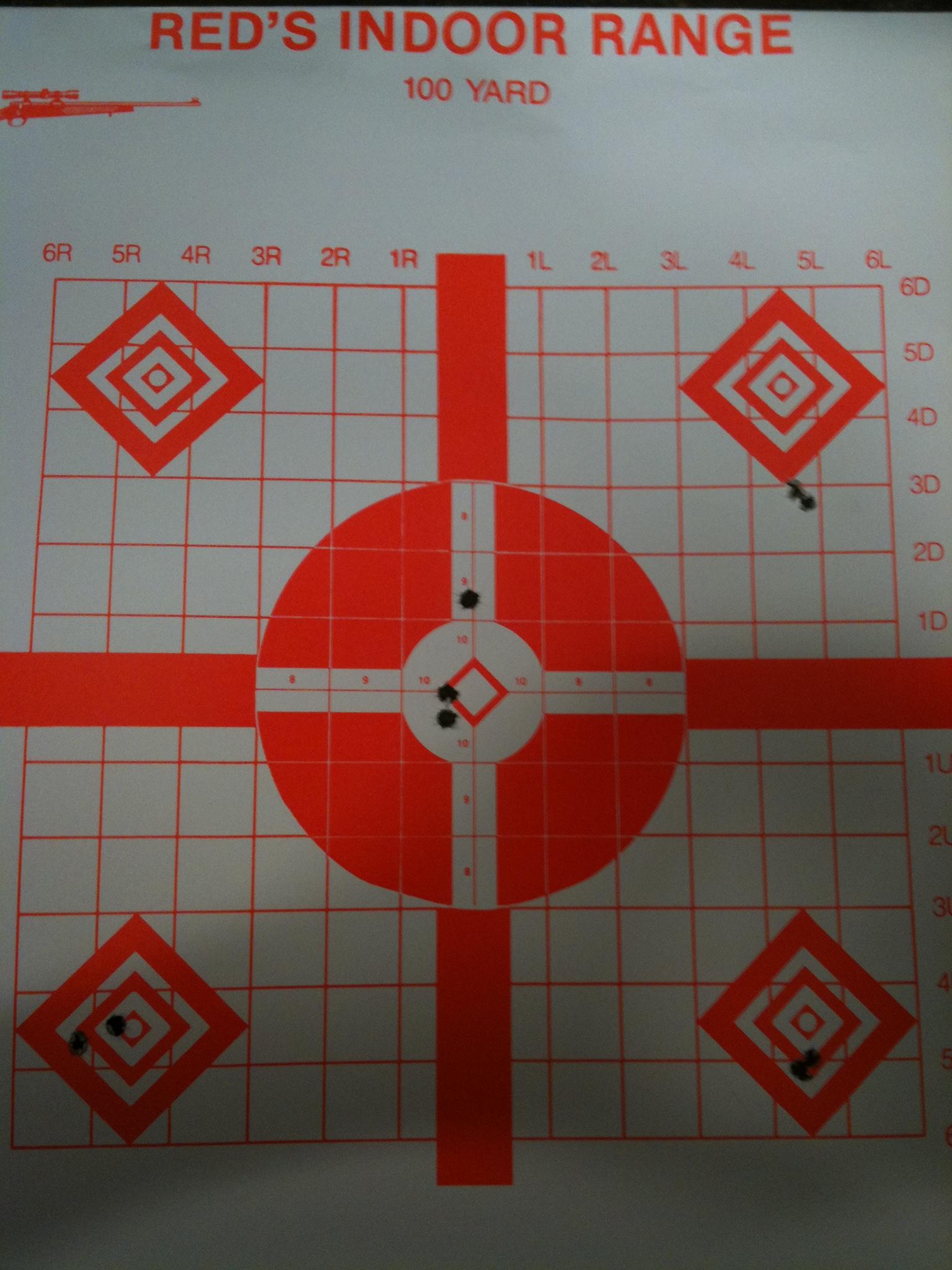

Ignore the ones in the center as I was still zeroing the rifle. This is from a Wilson Combat 6.8 upper using Silver State Armory 85 grain Barnes TSX “tac-load”. The 3 groups on the diamonds are not accurate?

If the data in the article is complete, then I’m not sure what to say. Either it’s your gun, your handloads, or your factory ammo choice. Try some Silver State Armory for factory ammo. For handloading, Silver State Armory’s small-primer brass is the best.

When it comes to performance when hunting, the article makes it sound like 6.8 isn’t good for much beyond varmints and whitetail deer. People are taking elk with 6.8, big mean hogs with 6.8. So, not really sure why 6.8 gets the brush-off from the author.

What’s more confusing? While the online article doesn’t have the sidebar, the print article has a sidebar on 6.8 by Bill Wilson (the “Wilson” in “Wilson Combat“). Bill has done a lot of testing and work with the 6.8, and here’s the proof. <– go on, click it. It’s not just the copy nor testimonials at the top of the page; it’s not just the guns listed in the middle of the page. Look towards the bottom of the page and the number of animals taken, and those are just the big trophy-like ones. Look how many big Texas feral hogs were taken with 6.8. And look all the way at the bottom at the steel plates and the grouping there at long distance.

Furthermore, Bill’s sidebar says:

My initial impressions of the 6.8 SPC were its accuracy potential, functional reliability and lack of recoil. Shot through quality barrels, it’s easy to get 1/2″ to 1″ 100-yard groups with bullets suitable for hunting. Few load combinations I tried shot worse than 2″.

One article contradicts the other article. So which is it? Is 6.8 accurate or not? Me? I’ll take Bill’s word for it because I know how much work he’s done in this area.

Bill continues:

But my personal reason for experimenting with the 6.8 SPC was not tactical or target shooting. It was hunting, specifically hog hunting. For those who have not hunted hogs, be aware that a 100-lb. hog is as tough to kill as an average whitetail, and a big, tough old 200-plus-lb. boar is as hard to put down as some elk-sized animals. They are tough, require good shot placement and deep penetration.

[…]

So how does the 6.8 SPC actually work on game? This little round has terminal performance way out of proportion to its size. At the time of this writing I know of more than 50 hogs weighing up to 270 lbs. that have been cleanly taken with the 6.8 SPC with neck and shoulder shots at distances up to 150 yards.

[…]

…my favorite [loads for hogs] being the 85- and 100-gr. Barnes TSX and the Nosler 130-gr. AccuBond. For predators and whitetails, I like the Barnes 85-gr. TSX, 110-gr. Sierra Pro-Hunter and the 100- or 110-gr. Nosler AccuBond.

Based on my hog and deer hunting experiences, however, I would not hesitate to shoot the largest hog, a large mule deer or a black bear with my 6.8 loaded with Barnes 110-gr. TSX bullets.

When you actually know what the history is of the 6.8, when you know what’s going on with the 6.8 and what it can actually do, you find it’s quite a fantastic and capable round. If you really want to stay on the cutting edge of what’s going on with 6.8, or if you just want to learn more about it, 68forums.com is your best resource.

I got into 6.8 because I wanted something more capable than .223/5.56 for hunting, but didn’t add tremendous amounts of recoil. Something in the AR platform gives lots of versatility and flexibility of options. I wanted this so I could have something my kids could hunt with. Thing is, it’s becoming what I’m enjoying to hunt with. 🙂  I’d say the only downside is there still isn’t an inexpensive option for plinking rounds.

If this article can get more people interested in 6.8 SPC, that’s great. Unfortunately I wonder if people are going to read the article and blow it off due to the way the article was written. Hopefully people will pay more attention to Bill Wilson’s sidebar.

Julie Golob goes hunting

This is a cool video showing Julie Golob‘s 2010 hunting season highlights

Two things stood out to me.

First, even for one of the best shooters in the world, she knew her limits and didn’t take a shot in the heavy wind. Actually, that she knows her limits is what helps make her one of the best shooters in the world.

Second, ah… those Barnes TTSX bullets, and in .308 Winchester. Is there anything that combination can’t do? 🙂

This is why I want a bigger sidearm for the field

Via EDNO, some guys go bear hunting and despite a high degree of lead ingestion, the bear just keeps coming. Full story.

Fifteen-year-old Chris Moen of Glide, who had drawn the tag, hit the animal in the shoulder with a .338-caliber rifle round, but he and his father couldn’t pick up a trail of blood.

They called on Wyckoff and friends to help track it. A few hours later, Wyckoff went up a hill for a view.

He heard a rustling in the bushes behind him, then a grunt. The bear had apparently circled around the group.

“We never even heard him,” said Wyckoff.

Wyckoff said he fired a round into the bear’s forehead, but the animal kept coming and climbed on top of him. From beneath, Wyckoff said, he got off three more rounds.

Then he tucked the gun beneath the bear’s chin. But it quit. Wyckoff, left-handed, said he had accidentally released the ammunition clip.

Odd that a .338 to the shoulder didn’t drop him. I’d be curious to know if there was an entry wound, if the shoulder joint was shattered, what the path through the bear’s body was. Very strange.

Then lots of .45 shots. I’m sure it was a .45 ACP round, and again I’d like to know if there was actually any penetration into the skull. My guess is the bullets glanced off the forehead.

Justin Norton fired a round from his .44-caliber pistol into the black bear’s stomach, to no avail. He approached the bear, put the gun behind its ear and fired again. It finally rolled away.

“I walked right up to his head, and he didn’t even look at me,” said Norton, 26.

With the dying bear still struggling, a final round finished him off.

And so… this demonstrates why I continue to look for a good backwoods sidearm — my 9mm might be fine for social purposes, but is an inadequate tool for the woods. While .460 Rowland certainly has much appeal on paper, the above situation demonstrates a couple good reasons for revolvers: 1. you’re not going to accidentally hit the magazine release on a revolver (unlikely with a good revolver that you’ll hit the cylinder release and drop your cartridges), 2. you can do contact shots with a revolver. There’s also 3, if there’s a malfunction, just keep pulling the trigger… when a bear is gnawing on you, you really don’t have time to do remedial actions.

Things that make you go hrm.

Observations from the morning dog walk

Dog walk this morning was well before dawn. Point being, it’s very cold, it’s very dark.

  • Loose pants are good. I can put some long johns on before the walk, then easily slip out of the pants and remove the long johns upon return. Layers are good, but only when you’re out in the cold. Tac Pants 1, Jeans 0.
    • I state that because I find myself gravitating back to wearing jeans. Tactical/cargo pants are very useful, but they have zero style. That said, I am looking at “tactical jeans”… not many out there, but they don’t even have to be “5.11”. Just the chief requirement being the front pockets have a more open mouth.
  • Christmas lights are very useful for detecting movement. They put down a blanket of predictable and traceable light patterns, so when a deer trots out it’s very easy to spot their movement.
  • There’s this buck living back here. Oh he’s pretty sweet. If he’s the same guy we’ve been seeing and he lives another year, he’s going to be a monster (for the Texas Hill Country) come next year. Shame we all live in the city.
  • Someday I’ll get more into star-gazing, such that I’ll be able to spot-recognize more constellations than just Orion. 🙂
  • An essential part of good home security is having a well-lit property — cockroaches don’t like light. This morning I noticed an interesting pattern. Houses that were well lit (interior and/or exterior) also were near street lights. Houses that had little to no illumination from street lights were also dark (no interior nor exterior lights). I could make lots of inferences as to the meaning of this, but they’d be only hypotheses. Still I found it interesting that if the house was in the light, it was really in the light, and if the house was in the dark… well, there were lots of places one could hide and do evil things without anyone noticing.
  • It’s good to carry your flashlight in your hands at all times. It doesn’t have to be on throughout the walk, but if nothing else it’s useful for letting that guy backing his truck out of his driveway know you’re there. Besides, if someone did jump out at me, having the flashlight already in hand means it’s the first line of “give ’em a WTF moment”: flash ’em in the eyes to disorient them while you take the precious seconds to side-step and assess the situation (or immediately draw). Of course, having big killer doggie at your side doesn’t hurt either. 🙂
  • Doggie likes cold weather — a lot. Some weeks ago Daughter said she can’t wait for summertime, because doggie will mellow out. 😉

Couple random things

Oh, before I go… couple random things.

1. Feeling a lot better. I think whatever I had is now gone… but last night I felt really bad. My guess tho? The cigar and glass of wine did it… body just wasn’t quite ready for that yet. 🙂   But I’m on the mend, almost 100%. Thank you for the well wishes.

2. Daughter did something cool.

My father-in-law has a deer lease (natch) and the first couple weeks of January there’s a special youth season. He invited Daughter out to come take a doe or a spike during that time. I spoke with Daughter about it and she declined. Why? because she doesn’t feel her marksmanship skills are quite there. She would rather pass on the opportunity than recklessly take it. I am mighty proud of her. I know  she’s got the ability to put a rifle round within an 8″ circle at 100 yards, but she’s not sure of her ability to do it on demand especially given the excitement and pressure of “the moment.” I respect her thinking here; she wants to do the right thing and would rather wait than rush into it and do things wrong.

So it just means more range time. No arguments there!

Make me think… maybe time to buy a second Ruger 10/22 and do an Appleseed with the kids. I’ve been wanting to do that for some time. Hrm.

The pork has been smoked

This morning I took care of the hog I shot a few days ago. Drained the ice water, brought the quarters inside, trimmed and cleaned things up. Since I’m taking the week off work, it was a perfect day to put something on the smoker for numerous hours. So I did.

I took both shoulders, cleaned them up, and put some Special Shit rub on them. Got the smoker going, initially with briquets but then went all oak wood once things got started. Temperature range was 250º to 350º… a bit of a wider swing that I wanted, but I’m still learning this smoker. It was mostly on the lower end of things, but the occasional 300º+ spikes. As soon as the smoker temperature stabilized, put the foil-wrapped shoulders on the grate. I opened the foil a bit for the first hour to ensure a good initial smoke. After the first hour I then mopped both shoulders with some apple cider vinegar and onion (each shoulder got half a yellow onion, sliced and broken apart). Sealed the foil up mostly tight… I want smoke to get in there, but retain as much moisture as I can. After a couple of hours I see one shoulder has less moisture than is desirable, so I baste both shoulders in half a bottle of Samuel Adams Boston Lager. Reseal the foil. After about 6 hours it’s evident the pork is done. I pull it off the smoker, leave it sealed until it cools enough to be handled by bare hands. Pull the meat off the bones, and all is good.

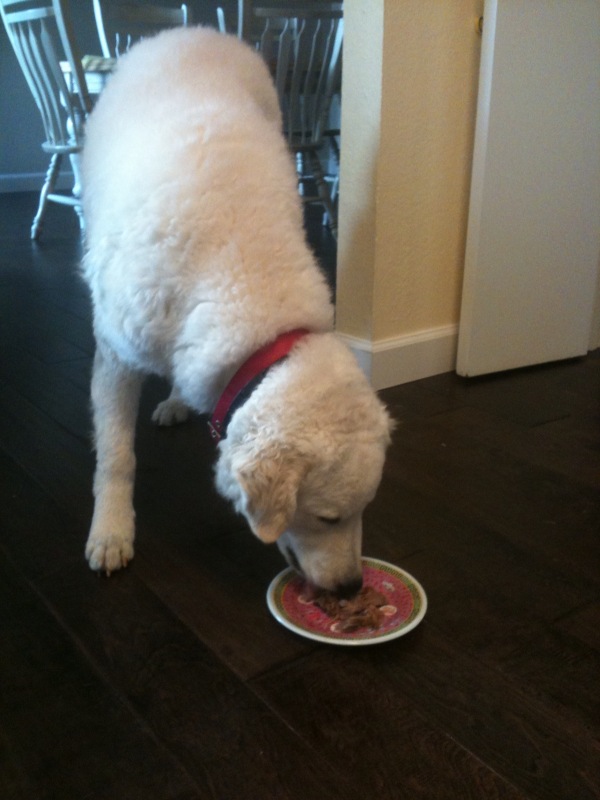
I even fixed a small plate for Sasha.

I think she was unsure of the rub spices, so I took the meat and ran some water over it to wash off the spices. She seemed to like it better. 🙂

If I do anything different next time, it’d be ensuring more moisture retention. One shoulder was great, the other wasn’t… there was a foil puncture due to the bone and while I tried to seal things up I think it wasn’t good enough (and I was out of foil). Still, that shoulder turned out fine, and it shows the key to the long smoke of lean meats is moisture retention.

Anyways, everyone seems pleased with how the pork turned out. So I guess it’s time for a beer and some pork tacos. 🙂

Wounding factors

In 1989, the FBI printed a paper on “Handgun Wounding Factors and Effectiveness”. You can find a PDF here, HTML here.

Since all pistol rounds suck, what matters? Most of all, penetration.

CONCLUSIONS

Physiologically, no caliber or bullet is certain to incapacitate any individual unless the brain is hit. Psychologically, some individuals can be incapacitated by minor or small caliber wounds. Those individuals who are stimulated by fear, adrenaline, drugs, alcohol, and/or sheer will and survival determination may not be incapacitated even if mortally wounded.

The will to survive and to fight despite horrific damage to the body is commonplace on the battlefield, and on the street. Barring a hit to the brain, the only way to force incapacitation is to cause sufficient blood loss that the subject can no longer function, and that takes time. Even if the heart is instantly destroyed, there is sufficient oxygen in the brain to support full and complete voluntary action for 10-15 seconds.

Kinetic energy does not wound. Temporary cavity does not wound. The much discussed “shock” of bullet impact is a fable and “knock down” power is a myth. The critical element is penetration. The bullet must pass through the large, blood bearing organs and be of sufficient diameter to promote rapid bleeding. Penetration less than 12 inches is too little, and, in the words of two of the participants in the 1987 Wound Ballistics Workshop, “too little penetration will get you killed.” Given desirable and reliable penetration, the only way to increase bullet effectiveness is to increase the severity of the wound by increasing the size of hole made by the bullet. Any bullet which will not penetrate through vital organs from less than optimal angles is not acceptable. Of those that will penetrate, the edge is always with the bigger bullet.

So there you go. This is why calibers such as .25’s, .32’s, .380’s, and stuff like bird-shot aren’t considered ideal for self-defense, because they just can’t get down where they need to be. All pistol rounds suck, and some suck more than others.

Of course, the real important thing is accurate placement in the right spot because a deep wound in the foot doesn’t do much to stop your attacker. Must be accurate, then must penetrate, then the bigger you can make that hole the better such as with modern hollow-point ammo or just larger calibers (and cue the .45 is king flame fest!). 🙂

Note as well tho, this doesn’t just apply to handgun rounds and self-defense. When I go hunting, I need a toolset that will travel the distance and still have enough energy and ability to penetrate as deeply as necessary. Big game animals are man-sized or larger, with potentially tougher hides and structure. I won’t take a .22 LR deer hunting in the Texas Hill Country, but my 6.8 SPC with Barnes TSX bullets can do the job just fine. So can .308 Winchester, so can a lot of other proper rifle calibers. But on the flip side, you still have to worry about over-penetration or being too much for the job. Oh sure, I could hunt a deer with a .50 BMG but I’d ruin lots of meat and that bullet would keep travelling right through the deer and come to rest who knows where. That too could have lots of problems. Firearms are more specific in their application than people tend to believe, so make sure you choose the right tool.

Bottom line: consider the intent behind the tool and ensure to use the proper tool for the job at hand.

Barnes Bullet Performance – updated

Got my recovered bullet in the mail. Looks gorgeous and is testimony to Barnes Bullet performance. I updated my previous Barnes Performance posting with more pictures, weight analysis, and other comments. Go read.

Updated: If you really want to see a neat picture of 2 expanded Barnes Bullets, click here. .458 SOCOM… mmmm.