HB 1893 update

I just received an email update from TSRA that HB 1893 passed out of committee by a 5-3 vote.

As of this writing the bill’s page isn’t updated and I can’t find more details yet… hopefully more details soon.

Updated: Still waiting on the meeting minutes. I’d like to know who voted how.

Updated 2: Finally, the meeting minutes have been posted. I list their name followed by party affiliation, district number, and NRA 2008 grade:

For: Merritt (R, 7, A); Frost (D, 1, A+); Driver (R, 113, A+); King, Phil (R, 61, A+); Lewis (R, 81, C).

Against: Burnam (D, 90, F); Mallory Caraway (D, 110, C); Rodriguez, Eddie (D, 51, D).

Absent: Vo (D, 149, B+)

The Rules

When dealing with firearms, there are rules of gun safety. I’ve mentioned “the rules” here and here and alluded to them here, but I haven’t had a good post that just discusses “the rules” so I’m remedying that with this post.

When I first was learning about guns I heard some basic safety rules, and as you dig around the Internet and talk with other people, you’ll find various incarnations of “the rules”. Some say there’s 1 rule, some say 3, some say 4, some say 10, some have even longer lists. Then you may go to a gun range and get even more rules, but often those rules pertain to the range and not general gun safety (and certainly they never negate the basic rules). All rule sets tend to be well-intended and have good advice. For instance, this 10 commandments of safety has some good stuff to it, both in terms of general safety and good advice for safely walking the fields while hunting. This is a list of 14 safety rules from a US Army manual. However, being an engineer I appreciate simplicity.

Perfection is achieved, not when there is nothing more to add, but when there is nothing left to take away.

– Antoine de Saint-Exupery

As a result, I gravitated to the two front-runners of the gun safety mantra: Col. Jeff Cooper‘s:

  1. All guns are always loaded. Even if they are not, treat them as if they are.
  2. Never let the muzzle cover anything you are not willing to destroy. For those that insist this particular gun is unloaded, see Rule 1.
  3. Keep your finger off the trigger until your sights are on target. This is the Golden Rule. Its violation is directly responsible for about 60% of inadvertent discharges.
  4. Identify your target and what is behind it. Never shoot at anything you have not postively identified.

and the NRA’s:

  1. Always keep the gun pointed in a safe direction.
  2. Always keep your finger off the trigger until ready to shoot.
  3. Always keep the gun unloaded until ready to use.

Between the two, I leaned towards Col. Cooper’s version of the rules. I read the debate between the two versions, I read Cooper’s Commentaries, I saw how other gun folk I respected followed Col. Cooper’s version, and I don’t know if I gave into the herd mentality and/or opted to bow at the altar of Jeff Cooper, but I settled on using Cooper’s 4 rules as the rules I would build my foundation upon. Life was good, and safer. But I must admit, something about Cooper’s rules never sat well with me. I think it was rule 1. While I do think rule 1 is a good guideline, there are aspects of gun handling that require you to treat a gun as unloaded, such as dry fire. I have been unable to reconcile the two, as a rule shouldn’t be violated; a guideline perhaps can be, but a safety rule should not. So how can I dry fire if the gun is (treated as) always loaded? In “the debate” a great point was made about this very issue:

The simple reason the NRA’s Rule One is superior is that if this rule is followed – even if all others are forgotten – nobody will get hurt. The same cannot be said about Cooper’s Rule One, and that is yet another reason why it is inferior – especially for the tyro.

The NRA method is far more universal than Cooper’s rules. Further, while there is no excuse for pointing a gun in an unsafe direction, there are lots of good reasons for treating guns as unloaded (e.g., dry-firing, inspecting the bore, etc.) when it is positively determined it is unloaded and made safe. I can dry-fire a verified safe gun in a safe direction; I can’t dry-fire if it is “always loaded.”

No “rule” so frequently and facially untrue carries much weight. That said, I still assert it is a valuable mindset. But proper mindset is a level above following rules to which only a minority of gun handlers ever aspire.

Furthermore, Jeff Cooper himself, at least at one time in his book Fighting Handguns on pages 97-98, advocated point shooting, which would preclude using the sights and thus violate his rule #3.

While sitting in classes at KR Training, Karl starts every class with a safety lecture. I noticed when he teaches safety to beginners, he teaches the 3 NRA rules. I asked him why he teaches that set of rules instead of some other. He gave me a detailed response, but there was one thing about his response that stood out to me:

The NRA rules are written as positive statements (what you should do) in a logical order (safe direction is most important) with nice clean parallel sentence structure (each starting with always for emphasis).

I hadn’t made that observation about the 2 rule sets, but (as usual) Karl is right. In light of my “mindset is everything” posting, this really struck home with me.

So as I think about it: the rule reconciliation, the universality and applicability, the structure, the presentation, the mindset, and the greater simplicity, I’m going to improve my mindset and adopt the 3 NRA rules. This affects my own mindset, as well as what I teach to others. I’ll still keep Cooper’s rules in my head as there’s still value to them, but I’m going to change my mindset to follow the NRA’s.

Inanimate object springs to life

… and manages to cause death and destruction. At least, according to this guy.

I am not unsympathetic to the death of 5 children. I am sure they were fully innocent, and this is the act of a lone, upset, confused, sad, twisted man. The whole story is sad and terrible.

However, a gun did not kill these children, a man did. Yes he used a gun, but that really doesn’t matter unless you’re pushing an agenda. This man did what he did because he had deep problems, and had he lacked a gun he likely would have found some other way. When someone driving a car hits and kills someone, we say the driver killed the person, not the car. If that person was drunk, we say a drunk driver killed the person, not Anheuser-Busch. When a person slips in the bathtub, we don’t blame soap. Why are guns singled out as the one inanimate object that is somehow able to do things on its own?

But what I really wish to comment on is Mr. Rivers’ comments in his posting. I had started to write this long piece, dissecting his assertions and arguments…. but I got tired and opted to edit my posting here to a simple thing.

Mr. Rivers, can you demonstrate and explain how your proposed solutions will actually solve the problem that you see existing? Don’t just keep reciting the same old mantras of gun control, no emotional appeals, but actually articulate how your proposed means will achieve your desired ends. I’ll wait right here for your answer. Joe Huffman has been waiting for nearly 5 years.

Mr. Rivers, I used to come from a similar place as you. Then I became educated on the topic, arguably from “the other side”. Knowing “both sides of the issue” instead of clinging to my old one side, logic won out and I now find myself where I am today. As a result, it’s difficult for me to look at viewpoints such as yours as anything but ignorant; I was ignorant on this matter, so it helps me recognize ignorance when I see it. Mr. Rivers, if you’re willing to engage in open, calm, and rational discourse on this matter, I’m happy to speak with you.

Imaginary boundaries

Another article discussing Texas’ effort for concealed carry on college campuses.

Though most college students are legally adults, they are still maturing and are often subject to stress that can lead to depression, substance abuse and other mental health issues, the statement says. Bringing guns into that environment could be dangerous.

The proposed law only extends to people with a concealed handgun license, which in Texas means you must be at least 21 years of age.  Furthermore, these same people can carry when not on campus. Is there something about the invisible line of a campus boundary that changes things? If a person is having problems, they’re going to have them on both sides of that line. If they’re not having problems, they’re going to not have them on both sides of that line.

Shirley Reed, president of South Texas College, said she also opposes the legislation and believes security should be left to the professionals. Although concealed handgun licensees may know how to use a weapon, they are not versed in how to make the judgment of whether to fire it, she said.

Because they are professionals doesn’t mean much. I can’t carry a cop around with me all day every day. Even if I could, it’s been ruled time and time again they are under no obligation to actually provide any sort of security. Then even if they would, it doesn’t mean they are effective and capable. Furthermore, Ms. Reed states that a licensees are not versed on how to make the judgment of whether to fire a gun. If you are in fear of your life, you can fire it. If you are not, then you shouldn’t be firing it. But apparently I can’t make that judgment call…. and then I wonder, what else are we not capable of judging? Ms. Reed, if you don’t think we’re capable of that, what do you think we’re capable of? Just what do you think of us and our ability? Why do you think so little of the students that attend South Texas College? Are you that ineffective as an educator?

“I strongly believe in the right to bear arms,” [Rep. Veronica] Gonzales [D-McAllen] said. “But there’s a time and a place for it.”

Please tell me, Rep. Gonzales, what that time and place is. Furthermore, it sounds like you have the ability to see into the future and can predict when bad things are going to happen. I don’t have such an ability, so the best I can do is take a cue from my Boy Scout training and Be Prepared.

“A school should be a peaceful environment,” Gonzales said

Why does a school get some sort of special treatment and consideration? It is not holy ground (and this isn’t Highlander). 

Marcos Silva, the [UTPA] student body president, said students have told him that if they knew a classmate had a gun, they would be more likely to focus on that person than what a professor was saying.

Why? You’re college students. You’re supposed to be open-minded. You consider yourselves wonderful good people that don’t hate, that don’t carry around prejudices. So why this attitude? Facts show folks issued a concealed handgun license tend to be amazingly law-abiding; in fact, they tend to be more law-abiding than the general populace. Why do you want to focus on a law-abiding citizen? Looking for a role model?
“If the law permits it for adults, with licenses … what is the problem?” said [Rep. Aaron] Peña, D-Edinburg. “We’re not dealing with children here. We’re dealing with adults.”
Apparently some think adults are only capable of exercising their own judgment in certain situations. In other situations in other places, they apparently need their mother or big brother to make their decisions for them.

Speak up or stay quiet?

While out buying the Buck Mark, I actually did visit a couple stores. I knew where I would buy, but I also knew they wouldn’t have some other things so make a round to a couple stores and pick up the bits and pieces as I go along.

So there I am. At the store, and it didn’t matter which store… the experiences were essentially the same. Looking through the case cases, or waiting my turn, or just walking the aisle. I hear people talking. Unfortunately most of what I hear isn’t good. I hear less than ideal advice, I hear incorrect suggestions, I hear well-intentioned but wrong direction. Much of it coming from the sales guys. I cringe, but I keep my mouth shut.

Then I’m at the counter. I ask to see a gun. Guy pulls a gun out of the case, doesn’t check it to ensure it’s unloaded. I lost count of how many times the sales guy covered me with the muzzle (I’d side step and take other measures to avoid the muzzle). I grant they take solace in their company policy that the guns in the glass cases should be unloaded, but that’s still no excuse to violate rule #1 (be it Jeff Cooper’s rule 1 or NRA’s rule 1). I say nothing, just keep my awareness up.

On my drive home, I think about the things I heard, the things I experienced. I think to myself, should I have said something? When a sales guy is giving bad advice to someone, or one customer says something to another that’s wrong… should I speak up? I feel I shouldn’t because it’s not my conversation, I shouldn’t be eavesdropping (I’m not trying to listen, but you just can’t help but hear their conversations). They didn’t ask my opinion, why would they want to hear mine, and who am I in their eyes that they should care and heed what I have to say? Then with safety violations, should I ask the sales person not to cover me? Would it matter, because if they’re violating the rules, how is chastising/correcting them going to improve anything? Should I tell the manager? Would that matter because if he tolerates the behavior now, what would my complaint change? Furthermore, there’s only so many gun stores in town and I don’t feel like becoming known as “that guy” and having a difficult time getting good service.

I want to say something because it’s hard for me to watch such things going on around me. But social graces and a rationalized feeling of “it’s not going to improve anything” keep me quiet.

Should I bother?

New addition to the fold

Just got back from purchasing a Browning Buck Mark.


I’ve been wanting to buy a .22 semi-automatic pistol for various reasons, biggest of which is teaching. A firearm chambered in .22 LR is a great way to introduce people to shooting because it has almost no recoil, is fairly quiet, and is easy for almost anyone to operate. It’s a great way to start off. Of course, it’s great to stick with as well… it’s a lot of fun to shoot with one of these! I’ve been hum-hawing around, trying to figure out what to buy and finally settled on the Buck Mark.

You may notice I don’t have just a plain old Buck Mark… no… it’s got color accents! I know, this makes me less tacti-cool, but my daughter likes it so that’s good enough for me. 🙂 The reason I purchased this particular model? I called around to various stores to see if they had any Buck Marks in stock and if so what models. Of all the places I called, this was the only model in stock that did not have grips with finger grooves. Since this will be a trainer gun used by people with all sorts of hand sizes, finger grooves were not desired. Furthermore, this was the 2nd to least expensive of all the ones in stock (the least expensive was only $10 less but had finger grooves). Sure I could have bought another model, but why? I’d spend more money for the gun, then have to spend even more money to replace the grips. While the next model up did have a fiber optic front sight (which I would have liked), it was $50 more, and that’s almost the cost of 2 extra magazines (which I obtained as well). Besides, I kinda like the coloring. It’s a fun accent.

Just need to give it an initial cleaning, then gotta get some time to get to the range.

Updated: Can you dry fire a Buck Mark? I’ve been Googling and finding conflicting information regarding this, so I thought I’d call Browning and ask.

No, they do not recommend dry firing a Buck Mark, at least without something like a snap cap in place.

While I know that, in general, you shouldn’t dry fire a rimfire gun (on an empty chamber), there are some where this is OK (e.g. my Ruger 10/22, the manual explicitly says it’s OK to dry fire). So I wanted to know for sure one way or the other, gave Browning a call, and there we go. Don’t do it. 🙂

Fanny Packs

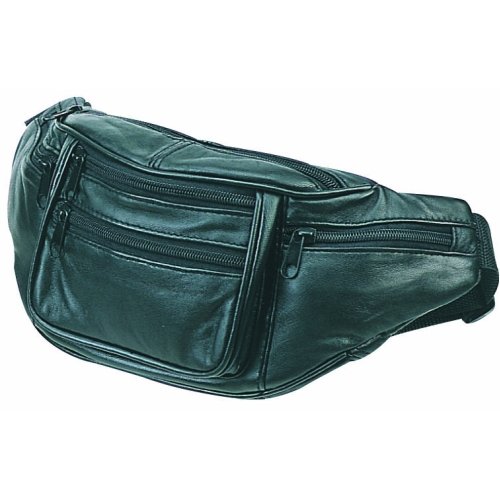
Call them what you want: fanny packs, man purses, I’ve heard almost every possible name for them. 

I think they’re great.

When I was a small child I watched my Dad’s daily ritual of going to his dresser in the morning, going to this special multi-compartment tray, and from each compartment loading up his clothing: money in this pocket, wallet in that pocket, checkbook here, put on the watch, keys, and whatever other things he kept in his pocket. Then in the evening he’d return home and empty everything back into the tray. Just one of those things a man did. So of course, as I was growing up and started carrying things in my pockets, I did a similar sort of ritual, but no cool tray. However as I got older, I also got lazier and would often just leave everything in the pockets of my jeans, so when I woke up the next morning I could just pull the jeans back on (provided they were still clean enough) and ta da… dressed and prepped all in one shot! Efficiency is intelligent laziness.

Still, I didn’t always care for this because often I’d want to carry more things and didn’t have a place for them. Or I might want to carry things that I didn’t want to crush (e.g., in my younger days I smoked cigarettes and wouldn’t want the pack to get crushed). Or just the simple fact that sometimes it’s annoying to carry heavy and/or sharp objects in your pockets (e.g.,keys). What to do? I think it was on a trip to New York City during my years in undergrad. I was seeing a bunch of bands and noticed all the crew guys and band members all wore these bags around their waists. One of the guys expounded upon how convenient it was to use them, so I tried it myself. Sure enough, it was a great thing. The main reason? Convenience. You can carry all of your stuff. All of your stuff is in one place, so when you’re in a hurry to get out the door, you just grab the bag and go.

For many years I wore a fanny pack. I could keep my keys, wallet, Leatherman, mobile phone, loose change, lip balm, and whatever else maybe needed carrying at the time. Just grab and go. My children even became conditioned to the sound of the “click” of the joining of the clasps of my bag to mean “Dad’s leaving”. The only problem with most fanny packs is they are cheap, so I wore out many of them, often having to replace them every year. This was always tough because I had a few rules about the bags:
  1. It must be leather. Nylon? Sorry, but no. I don’t care much about fashion, but nylon… no.
  2. It must be black.
  3. When wearing it, you do not wear it over your untucked shirt. 

And it’s difficult to find a well-made fanny pack that fits at least the first two criteria, and has enough space and utility to be of worth. Basically, it’s tough to be cool wearing one of these, but you can work to minimize how dorky you look. 😉


Then I entered into the world of guns, and you discover that fanny packs can be useful for carrying a concealed handgun. Unfortunately, most purpose-built holster-fanny-packs, IMHO, suck. First, most are nylon (violates rule 1), but at least most are black (hey… it’s not tacti-cool if it’s not black, right?). Second, most don’t look like fanny packs. Most look like some sort of odd-shaped compartment strapped to your waist. Third, they can be huge. They have to be large enough to hold a handgun, and so they often end up being larger than a lot of traditional packs. This is exacerbated if you wish to have your pack hold more than just the gun (e.g., hold keys, wallet, etc.)… now the pack will be even larger, even heavier. Furthermore, they may have to do odd things to be able to support the weight of a handgun (and perhaps anything extra you carry), such as reinforcement (most fanny packs are not stiff), or maybe a strap on the back of the pack that can loop around your belt, but how many “social” fanny packs do this? I have just not been impressed with the holster-packs on the market.

That said, I don’t think a fanny pack holster is without merit. It does allow you a way to carry, especially if there isn’t any other way. For example, to go jogging, to go to the gym (i.e., a place where you may be changing clothing). Riding a motorcycle, you can keep it in a handy location that isn’t obscured by a riding jacket and is still somewhat on your person. Women can have a difficult time finding a concealed carry solution because their bodies are just built differently than men (IWB carry usually just isn’t possible); a fanny pack can provide a solution. Another nice part about a fanny pack vs. other methods of off-body carry (e.g., daytimer, handbag, etc.) is the fanny pack is and should remain strapped to your body, thus you are less likely to forget it or leave it somewhere. Perhaps most importantly, a fanny pack can provide urban camouflage.

If you carry concealed, you want to do your best to blend in. I live in Austin, Texas, and due to the hippie scene, fanny packs are fairly common. In fact, this is perhaps an argument to violate the “leather/nylon” rule because you can go to REI and pick up some fanny packs for other purposes and may be able to carry a small gun with you on a back-country hike, where carrying in a IWB holster may be possible but may be uncomfortable. I still think a purpose-built holster fanny pack has advantages (e.g., many have a means to hold the gun secure, they provide fast and “correct” draw access), but your situation may dictate differently. You have to choose what is right to serve your needs.

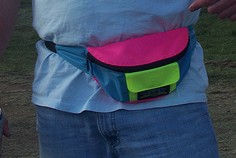
Some argue that wearing a fanny pack screams that you have a gun. Well, maybe to other gun folk, but apparently not to the majority of the public. Again, in a place like Austin, no one blinks at a fanny pack. Or if you’re in a location heavy with tourists, maybe that rainbow nylon pack is just right. Key thing is, blend in with your surroundings.

In the end, a fanny pack is not a bad thing. Yes, some people hate them with a vengeance, but I’m a practical person and fanny packs provide a practical solution. They carry whatever gear you deem important to carry and keep it handy.

Texas 30.06

If you live in Texas and have a concealed handgun license, you know that 30.06 not only refers to a rifle caliber, but it also refers to a particular section of the Texas Penal code.

texas3006.com is an informal but helpful website for keeping track of places that post 30.06 signs.

Dry fire, do you do it?

So everyone goes on about the rising cost of ammo, the reluctance to shoot what little ammo you have, the difficulty in getting to the range, and whatever excuse possible. I don’t disagree… I don’t get to the range nearly as much as I want to either, and even shooting a .22 is getting expensive! However, that’s OK. Dry fire is a fantastic way to keep your chops up.

One great thing about dry fire is you can practice skills that you just can’t practice at the gun range. For instance, does your range let you draw from a holster? If not, that’s ok, you can do it as a part of your dry fire practice at home. Can you do movement drills at the range? If not, you can do it at home with dry fire.

Really, there’s no excuse not to dry fire.

When (not if) you dry fire, you must do it safely. Kathy Jackson has a great article on safety practice for dry fire. The biggest thing is to ensure a clear cut distinction between your dry fire session and the time before and after the session. That when you start, you verify the gun is unloaded and ensure a safe environment. While you practice, you practice uninterrupted and if for some reason you are interrupted you ensure when you pick up the gun again that you start practice all over again (i.e. verify the state of the gun). When practice is over, it’s over. Yes it might seem silly to recite aloud that the gun is unloaded, but there’s nothing silly about a negligent discharge. Frame your practice time appropriately.

I forget who said this, but one of the top shooters said something to the effect of for every live round you wish to fire at the range, you should do 10 dry fires. So if you want to go through 200 rounds at the range, you better dry fire 2000 “rounds” at home beforehand. You will be much better off, and the time and ammo you spend at the range will be time and ammo much better spent. Don’t believe me? Try it.

You can find lots of great dry fire training aids online. Some of my favorites:

Just about any shooting drill can be adapted for dry fire. Remember: slow is smooth, smooth is fast. Strive to be correct, perfect, and smooth. Once you can do that at a given (slow) speed, speed it up by 10%. Practice the things you like, practice more the things you hate. Don’t focus on your mistakes and failures, envision your success.

If you carry a concealed handgun, you owe it to yourself to be the best you can be. Handgun skills are perishable, so you have to keep your chops up. Even if it’s nothing more than doing 10 draws and presentation from concealment, you can find the 5 minutes a day to do it. Someday, your life may depend on it.