OK, that settles it

Yesterday I was waffling about rifles.

This morning, it’s settled.

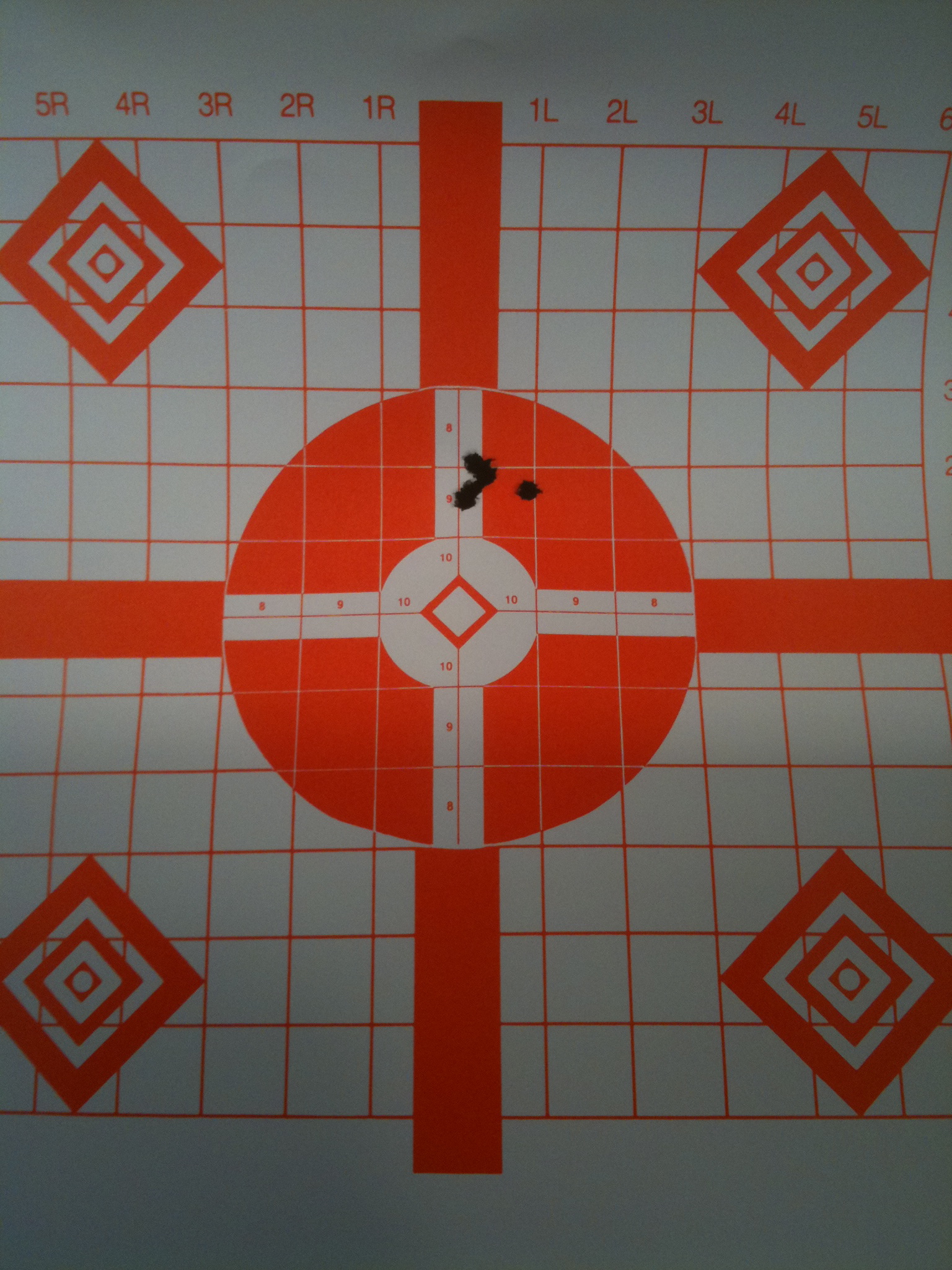
I went to the local indoor gun range to recheck zero. I took my 6.8 and my .308 bolt-action. I haven’t shot the .308 since the water buffalo, so I figured it would be right to verify it. I knew the 6.8 was where I wanted it, but I had cleaned the gun when I got home so I wanted to shoot it to ensure all was truly good.

I’m glad I did.

I shot the .308 first. The results surprised me: the holes were all over. I’m not totally sure why. Yes, everything was within a 3″ circle at 100 yards, but it should have been around 1″ circle. Things did not go where I was aiming. Sure, it’s still “minute of dead deer”, but after 5 shots I figured it let the rifle cool down and I’ll try again later. I switched to the 6.8 (I’ll recount that momentarily), then came back to the .308. This time 5 rounds and while the grouping was much better, it still wasn’t as tight as it should be. Still, she should be good to take anything out to 250 yards (put the crosshairs in the middle of the target zone, press trigger, it should handle it), but she is going to be backup gun. I’ll have to look deeper into her issues later.

But the 6.8? Oh… she sung.

That’s 5 shots of SSA 6.8 SPC 85 gr. Barnes TSX tactical load at 100 yards. It’s shooting where I want it, grouped decent enough. I should have shot 7 to 10 for a better grouping average but I didn’t have a lot of time this morning and the range was getting pretty busy. Still, it felt right, it was consistent with the last time out.

I can only wonder if the gods are saying to me to leave the .308 behind and shoot the 6.8. It’s what I want to do, and seeing how things went this morning, I feel confident the 6.8 is going to perform this time around and the water buffalo incident was a fluke. The .308 will go with me, but I reckon she’ll be cold all weekend. 🙂

Wish me luck.

Rifle waffle

Deer season opens this coming weekend (gun; archery was last month). I’m getting excited. Already been having dreams, and have been waking up early in anticipation of having to get up early to get out to the property.

I need to run my rifles back by the local indoor range just to (re)verify zero. They should be where I want them, but I can’t help but want to re-verify to be sure. The thing is, using the 6.8 SPC rifle is new… and while I know it will do the job, gosh but something makes me want to use my .308 bolt-action instead. Maybe because it’s proven? Maybe because it’s a big-ass .308″ 168 grain Barnes TSX instead of a 85 grain .277″ TSX. I don’t know. I know it’ll work. I really want to use the 6.8 to take the deer, but the .308 is going to come with me. Maybe it’s the false start with the 6.8 that’s making me waver a bit.

So as I’m packing the rifles up for the range trip, I see that I don’t have as much Federal P308H as I thought I had. This is a Federal factory load, .308 Winchester, 165 grain Barnes TSX. It’s a good round, always performed well for me. But it got me thinking… I want to start on rifle cartridge reloads after deer season calms down. I thought to do .223 Rem to get me back into the swing of rifle reloading. 6.8 is something I want to do. But gosh… if I don’t have a lot of .308 maybe I should just do that to get stocked up.

Too many things buzzing through my head. 🙂 Right now, just need to focus on the deer.

Ted Nugent – on hunting

Ted Nugent was interviewed on “Deer & Deer Hunting TV“. (h/t blabbermouth)

Ted, never one to politically correct, speaks his mind on issues like hunting ethics:

Silly regulations and laws. I have to admit, I’m kinda with Ted about issues of baiting.

Fred Bear, sacred cows, public relations.

The pursuit of happiness

Hunting advocacy

My First Dove Hunt

Finally got to go dove hunting.

I’ve known G for many years through Scouts and church. He’s an avid hunter and has been working on me for some time to go dove hunting with him. Finally it was able to happen.

He hunts at this property just outside of the city limits, which turns out to be close to my house. I met the property owner tonight and turns out he too goes to the same church. Neat. He owns a few acres and the doves love to fly through there. So we can sit back, relax, and when the doves fly overhead, off we go.

Unfortunately, the doves were very slow tonight, and when they did fly they were flying very high. Still, I went through about 40 shells, and managed to bag my first dove. 🙂 For sure I got one, I believe I got a second. In total we were able to take home 7 doves, and probably shot 9-10 (2-3 were unable to be recovered, tho we tried). G’s a fantastic shot.

Despite it being slow, it’s not always about bagging something. Sometimes it’s just great to get outside, hang out with friends — make new friends. If we can shoot a little, have a beer, and bag something, all the better.

The cool thing? They let me take home all of the doves. We field dressed them all and G taught me how to do it. Dang, that’s easy and takes very little time. Was also neat to see what the doves had been eating. Most had been eating seed: millet and sunflower. One had corn, another certainly had been eating something in the field. All of the meat is in the fridge, and I know what I’ll be having for lunch tomorrow. 🙂

Fantastic time. Looking forward to doing it again!

Feral Hog Abatement Grants in Texas

Texas has a huge problem with feral hogs.

But [Gary Silvers, of Texas Wildlife Services] has his job cut out for him, as estimates by the Texas Department of Agriculture puts the feral hog population in Texas at two million. The state is home to the largest feral hog population in the country.

“I’ve been doing this for 30 years, and I haven’t seen any decrease in the population of hogs,” Silvers said.

They don’t have much for predators, and they breed like crazy. You think rabbits multiply fast?

Why are they trouble? Because they can tear things up, destroy crops, cause problems for livestock. The damage they create is huge and costly.

So this article discusses issues of population control. Texas Department of Agriculture is creating a Feral Hog Abatement Grant program to help in this effort.

Hey… if you need help getting rid of some hogs, I’ve got 6.8 SPeCial ways I can help you. 🙂

No Doves (today)

Just spoke with my buddy.

The guy that owns the property we’d be dove hunting at came down with something… he’s been in bed all day, conked out. 😦

So, the dove hunt has to be postponed until next week.

Kinda a bummer because I was all pumped up, but also a blessing because well… I’m just not that much of a shotgunner. I spent today working the shotgun dry with some snap-caps, and while I’m pretty sure I’d bring down a few birds, a little more time to get some more practice is a good thing.

Plus, this means I can join the family at the church’s annual fair! Time for gorditas and roasted corn! 🙂

Legal Shotgun (for bird hunting)

In order for me to legally dove hunt in Texas, I need to follow some rules regarding the means by which I take the dove.

From TPWD on “means”:

Game animals and game birds may be hunted with any legal firearm, EXCEPT:

Magazine Capacity (number of shells/cartridges allowed): There are no restrictions on the number of shells or cartridges a legal firearm may hold when hunting game animals or game birds (except migratory game birds, see Legal Shotgun).

And when you look up Legal Shotgun:

Legal Shotgun: Shotguns not larger than 10 gauge, fired from the shoulder, and incapable of holding more than three shells (shotguns capable of holding more than three shells must be plugged with a one-piece filler which is incapable of removal without disassembling the gun, so the gun’s total capacity does not exceed three shells).

So since I’m going to be hunting with a Mossberg 500 12 gauge (pump action), I need to plug my magazine to only hold 2 shells (2 in the mag, 1 in the chamber). No problem there, the shotgun came with a special dowel, which actually was so long it prevented anything from going into the magazine, so I just cut it down to size and there we go.

However, this particular shotgun happens to double as a home-defense tool, so it has a TacStar SideSaddle bolted onto the side of it. Hrm…. how does TPWD define “incapable of holding more than 3 shells”? Because that saddle sure lets the gun hold 6 shells. I’d hate to have a visit from the Game Warden and get nailed on a technicality. So I called TPWD and spoke to whomever answered the phone. He told me that yes, this is perfectly legal. What matters is the ability to keep rattling off shots… you really only get 3 shots per “run”, and that’s the intent. But a way to just carry more ammo? Not a problem.

So based upon TPWD’s guidance, I’m going ahead and I’ll leave the saddle on there. Meantime, I will also drop them a line to ask if they could clarify the wording.

Updated: So when you have a question, it won’t get answered if you don’t ask it to the right people.

Tho I had called, it’s nice to get things in writing. I sent TPWD an email to 1. ask 2. request they clarify the documents. I’m not sure they groked my request to actually update the documentation, but they did write back saying:

The firearm itself chamber or magazine included may not hold more than 3 shotshells at any time while hunting any migratory birds.

So there you go.

Of acorns, sweet acorns

I walk to the mailbox.

I pass a neighbor’s oak tree. I see acorns growing on it, getting pretty plump.

The thought that goes through my head?

“Gosh, that’s going to make good food for the deer.”

Yes… hunting bug is biting me again. Tis the season.

Dove hunting

It’s dove hunting season here in Central Texas.

I know some people dedicated to it. Me? It’s just not my thing.

First, I’m not really a shotgunner. I just don’t shoot them much, thus I don’t get much practice shooting flying things (be it clays or birds). The times I’ve shot skeet I really enjoyed it, but I just don’t seek it out (handguns are my focus). Second, shooting doves seems like a lot of work for little gain. All the feather plucking, cleaning, prep, and so on… just for a little nugget of meat? I guess that’s why if I’m going hunting I tend to prefer bigger animals (e.g. I am dreaming of elk hunting one of these days). The cost-benefit ratio just seems slightly better there. So the dove thing just hasn’t appealed to me.

However….

A guy I know from Scouts and church is an avid dove hunter. Last year we were talking about it and he made comments to me that I should go out with him; I passed. This year he started on me again and I said “why not?”. So I pulled the 18.5″ barrel off my Mossberg 500 (it’s a field version, wood furniture) and put the field barrel back on with a modified choke. I went out and bought some 7.5 shot shells. Got my hunting license with the migratory bird stamp. And… I’m ready. 🙂

Haven’t gone out yet. I’ll be talking with my friend tonight to figure things out, but it looks like maybe this weekend.

I figure why not? Try it. If I get something, great. If I don’t, it should just be fun to get out and try. Lord knows doves are not in short supply around here…. I’ve seen 2 dozen in my yard at times, and I must admit when I see that I have thought about how tasty that could be, if only I didn’t live in the city. 😉

We’ll see how it goes. If any of you are dove (or bird) hunters and have tips for me, please share in the comments.

Feral Hog Anatomy

Via TacticalGunReview.com I found this TexasBoars.com forum thread. Because of that and some other things I’ve had well… I wanted to make one good posting about feral hog anatomy and kill zones, so I could have a good “one-stop” reference on the topic. So whenever I need a refresh on the topic, I can just pull up this article and have all resources in one spot.

I’ve spoken about feral hog anatomy before. That article included one of the better hog anatomy pictures I’ve seen:

Feral hog anatomy

TexasBoars.com has a great article on feral hog anatomy. They provide a nice shot placement picture:

Feral hog kill zone (from TexasBoars.com)

Feral hog kill zone (from TexasBoars.com)

Speaking of shot placement, the California Hog Blog talks about shot placement. They have great graphics showing the neck shot:
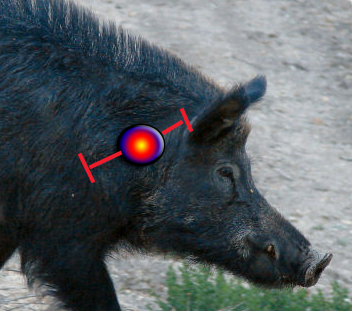
Feral hog kill zone - neck shot (from California Hunting Today's Hog Blog)

Feral hog kill zone - neck shot (from California Hunting Today's Hog Blog)

and the more traditional kill zone:

Feral hog kill zone - traditional zone (from California Hunting Today's Hog Blog)

Feral hog kill zone - traditional zone (from California Hunting Today's Hog Blog)

But while all of these are good, the TexasBoars.com forum thread has something that brings it home better than any other thing I’ve seen.

Is it this picture and description of the kill zone?

Feral hog - spine highlight (from TexasBoars.com)

Feral hog - spine highlight (from TexasBoars.com)

Here it is. A simple highlight of the “drop a hog in its tracks zone” DRT.
Don’t make the shot any further FORWARD or by NO MEANS any further BACK into the rib cage.

If the head is NOT DOWN the line would be horizontal.
The IMPORTANT FACTOR is don’t shoot high! If you shoot high the hog will likely hit the ground,, and then get back up once the “stinger” in the spine subsides as addressed in the video. If you hit a little low, thats OK.
A sign that a shot is HIGH is a SQUEAL. If the pig hits the ground and SQUEALS you should shoot it again to be safe. If the lungs or trachia are damaged and completely bruised the hog will not be able to squeal generally speaking.

No… it’s something else in the thread:

This video.

While the topic of the thread and video is more about bullet construction and performance, Kevin Ryer (TexasBoars.com’s admin) takes a freshly killed feral hog and dissects it. While doing so, it becomes very obvious where the kill zone is and why that’s the important kill zone.

Why does this matter? Because for people used to hunting deer or other such animals, the kill zone on a feral hog is slightly different. The chest cavity is a small target. It’s very low and forward. While the animal presents a large side to you, if you divide the animal in half horizontally, the lower half is really all you have to work with because of how the spine slopes as it approaches the head.

Here are a screen shots from the video that show what I’m talking about.

First, here’s where the 250# hog was shot in the shoulder. Entry wound. The knives are pointing to the hole, square in the shoulder.

Feral hog dissection - entry wound, square in the shoulder.

Feral hog dissection - entry wound, square in the shoulder.

He then cuts through the shield, removes the front leg, then gets into the chest cavity.

Feral hog dissection - location of spine

Feral hog dissection - location of spine

Kevin is holding the knife blade along the spine, and his left index finger is also pointing to it. Notice how the spine is about half-way through the animal… that is, about half their body is above it and half below it. This is lower than on a lot of other animals. Notice the bullet wound is below the spine. You have to aim lower than you may be used to.

And while the screen shots are nice, you really need to watch the entire video. There are a lot of comments Kevin makes, a lot of things he goes through. And again, while he’s focused on discussing the use of a fragmenting bullet, there’s a lot of importance placed on understanding anatomy and ensuring you get the bullet into the proper kill zone. It’s a well done video, and Kevin deserves much credit and thanks for making it.

The key thing is you have to shoot a little lower and a little more forward on a feral hog than you would on a deer. Think midline or a little below midline, and forward since the chest cavity isn’t that big. The target area is small, and, as Kevin points out in the thread discussion (read it!), depending what firearm you’re using it may be smaller. Shots have to be good and you have to know the anatomy clearly so you can ensure a good shot.

Thank you, Kevin, for all your work. It dispels a lot of myths and helps out a lot of hunters.