The bullying experiment

There’s been a video going around about “the bullying experiment”.

The premise of the video is a couple guys act out a bullying scenario in front of random people, filming on hidden camera. They want to catch how people react, which ranges from ignoring it to walking away to getting involved.

I agree this is an interesting social experiment.

I agree it seems sad and terrible that people will not get involved to help someone that appears to be in danger.

I agree that bullying is a problem, but it’s not just a problem of this generation because bullying has been around forever — it’s nothing new. Still, that doesn’t make it right.

But I have to take issue with the video and the suggested advice.

What they are wanting is for people to intervene. I’m not sure that’s wise. All you are seeing is a slice of the greater picture, and is that slice enough to know what’s really going on? As I’ve discussed before, you cannot always know what the whole story is based upon the small slice you see.

It appears they are performing this experiment on a college campus. It’s a fairly homogeneous group of people, in a fairly contrived and “safe” environment. What if they tried this in other areas of town? like on the rich side of town? poor side of town? downtown? in the city’s violence hotspots? That might bring about some interesting different responses… one of which could end badly for the actors.

And that’s part of why people don’t want to get involved. They have their own lives to preserve. It goes back to things like “beer & tv time” and asking “is this worth dying for?” because your getting involved may well bring you unwanted harm.

It could also be that people don’t know what to do, how to react. They’ve never experienced this before so they freeze because that’s all they can do as they try to process what’s unfolding before them. Or perhaps they were raised to just always avoid trouble, so they flee. Shall we persecute them for their self-preservation?

So, I think it’s a bit naive for the video producers to suggest the solution to bullying is for people to get involved. Yes I understand their motive, and I do think that being silent about bullying is a way to allow it to perpetuate. Just realize that “fighting” bullying doesn’t necessarily have to involve physical intervention, and not everyone is willing to physically intervene.

But that’s also where I have a greater issue with this campaign.

It seems the suggestion is the solution is for you to get involved.

That bullying perpetuates because of your fault. That this is someone else’s fault, and it’s someone else’s responsibility to stop it.

What happened to teaching people to stand up for themselves? It used to be the way you handled a bully wasn’t to have someone else fight your battles, but for you to stand on your own two feet and stand up to the bully. And yes, that might mean you have to take them down a peg. Modern anti-bullying solutions seem to revolve around others making changes, with little focus on you improving yourself and your own condition.

If as the video producers say “change starts with the people”, the first person you can change is yourself. Start there.
 

Safety tips

I received this list of “Christmas Safety Tips”. But really, these tips are solid all year round.

The original list of tips is in plain text, and my comments follow in italics.

· Always stay alert to your surroundings and the people around you.

Keep your head up, eyes looking around – not looking at your phone.

· Lock your vehicle and close the windows,even if you will return in a few minutes.

There’s mixed data on locking and closing (some say you should, some say it doesn’t matter), but the key remains the same: do not make a tempting target. Do not have things in your car that make it tempting for theft. If you must (e.g. out shopping), locking doors and rolling up windows, keeping packages and “tempting items” out of sight, etc. work to minimize and deter.

· Park in well lighted areas.

Well-populated too. However, don’t be complacent, as stuff happens in crowd in the middle of the day.

· Remember to take your keys with you. Place valuables,(e.g.Mp3players,G.P.S.),and packages in the trunk. If the trunk is full, place the items beneath covered inside the car.

If you can, make trips home to drop off packages.

· If you become separated from your children, teach them to go to a store clerk and ask for help.Try to always have a way of directly contacting people you shop with.

This depends in part on the age of your children as to the actions you take, but fundamentally it comes down to planning and discussing with your children what to do before things happen. While it’s good to discuss well in advance, it’s also good to discuss immediately upon arrival. For example, when you first walk into a store, point out the clerks and how to find and identify them (name tags? uniforms? register stations?). Immediately establish and verify the plan with your child so it is fresh in their mind.

I have found that if the child is too young to remember your contact information, take a small card (business card, index card, etc.) and print your relevant contact information (name, mobile phone number, etc.) on the card such that the child could just give it to the clerk for them to use to contact you. When my kids were really young, I put the card in their shoe or sock, so there was less chance of the card being lost, but the child would know where it was.

· Avoid carrying large amounts of cash.And don’t flash your wallet or money.

Be discrete.

· As a reminder,theft is one of the easiest ways that thieves can steal your identity.

Please remember to review the contents of your wallet or purse before you go shopping.Think about what information you carry in excess.Don’t bring any credit cards with you that you won’t be using.Have all of your personal information written and stored to report documents you lose.

This is a good one. Because if you do lose your wallet, if you are mugged, or whatever, it’s less information to go around.

· If your credit card is lost,stolen, or misused, notify the issuers and credit reporting agencies immediately.

And keep an active eye on your bank statements, eStatements, if the bank and/or credit card has an online account mechanism, watch the account. The recent data breach at Target stores shows that much is possible, even if your information wasn’t directly taken.

· Keep receipts separate from purchases. If your shopping items get stolen, this makes it harder for a thief to cash them in at the store.

· Don’t carry too many packages.It is important not to overload yourself with packages,to have clear sight of your surroundings and a good range of motion.

Distribute the load. Do you have others with you? Let them carry some packages too. Can you request a store employee help you out to your car with your packages?

Wife and I tend to follow a pattern where she carries things and I don’t. I know it looks bad, but it allows me to keep my hands free and unencumbered.

· When returning to your vehicles have keys in-hand.

I don’t like to do this, because it makes my intent evident. However, the point is to have your keys easily accessible and not something that you must rummage around for 5 minutes trying to find. This will cause your head to be down, your eyes to be averted, and be unaware of your surroundings. Just ensure your keys are easily and quickly accessible.

What Predators Look For

· Someone looking friendly, timid, lost, absent-minded, or intoxicated – thus more easily manipulated.

· Someone wearing earphones or distracted with a cell phone – unaware of surroundings.

· Someone unaware their being followed until their isolated.

· Someone parking close to trucks that prevent witnesses from seeing you – predators seek that kind of cover.

· Someone “handcuffed” with both arms loaded with packages or a child.

These are true things, regardless of time of year. The common factor? Unawareness, either by action (e.g. nose glued to a phone screen) or distraction (packages, children). Awareness is your #1 defense, because the sooner you can be aware of potential danger, the sooner you can work to avoid it.

Get over it

I have an elderly neighbor (she’s in her 80’s). She’s capable: she totally lucid, drives herself where she needs to go, and you can tell she’s got her pride — she wants to be self-sustaining and not be a burden on anyone. We do help her out as she needs, but again you can tell she does NOT want to burden anyone and only comes to us for help when she’s exhausted all options. I respect that, and am always happy to help her out when she asks.

But let’s face facts. She’s in her 80’s. She moves slow. She’s fairly frail.

She is vulnerable.

I admit, I think about her vulnerability. Some days ago I was over at her house helping her set up one of those “medical alert” systems. She knows her state in life (thus why she got the system for herself). But it still weighs on me. I often find myself thinking about her vulnerability, and if there’s anything I can do to alleviate it.

Then I step back and think about greater issues.

Our neighborhood has recently had a rash of break-ins. Thankfully it’s mostly been cars, but I do know from time to time homes are broken into.

I cringe at the thought of her home getting broken into. And let’s face it. Most break-ins are not random. The criminal has stalked and monitored and determined ahead of time what houses are good targets.

What can she do? Some 16-35 year old male breaks into her home. How vulnerable she is. What can she do in the face of such a threat?

She’s not like Mayor Bloomberg, with her own “private army”, which she can enjoy in her own retirement. She’s not so privileged as to have to have a security detail. What can she do?

There’s so much big talk about “leveling the playing field” in so many other areas of life, but what about here when life itself is at stake?

Anti-gun mantras ring hollow with me. If you’re going to throw worn arguments at me, I say you should look her in the eye and tell her the same. Think about how your actions to deny our society’s most vulnerable citizens with a means of an equalizer actually serve to hurt them more than help them.

Because that’s what a gun is: a force equalizer.

It allows folks like her to tell some evil person bent on hurting her, on destroying her life, to stop and go away.

Can you look her in the eye and deny her?

I’ll even take pro-gun folks to task.

There’s so much rah-rah about guns, calibers, and what’s acceptable for personal defense. It’s not just internet message board bravado, but it’s even things like how Texas law requires a certain “big caliber gun” (.32 caliber or greater) to pass the CHL test. You could carry a .22, but you can’t test with it. Yes, I understand why they required things in this way… but it still kinda bothers me.

I think about my frail neighbor.

Could she fire such a gun?

Pull that trigger weight?

Manage that level of recoil?

I don’t know, but given what I’ve seen of her frailty, I’m not sure.

But because of her condition in life, why should she be denied?

What are you getting into?

Greg Ellifritz recounts a recent experience that has some good lessons for concealed carry holders. You need to read his article to fully understand what I’m about to say.

But in summary, in case Greg’s article disappears, you have a situation like this:

  • woman and man rolling around on the ground, punching, kicking, something ugly going down.
  • woman is screaming “rape!”
  • carry-holder rolls up on scene, decides to get involved.

Seems pretty clear-cut, eh? If you were the one rolling up on scene, what would you do?

And now, how would your response change if you learned the man was an undercover cop? Which was the case.

Greg’s point:

1) Know what you are getting into. The law generally allows you to use deadly force to defend an innocent third party from what you believe is likely to result in serious injury or death. The key word here is “innocent”. A robber resisting arrest is not an innocent third party no matter how many times she yells “rape”. You can testify all you want about what she said and how you thought she was being attacked. It won’t matter much as you wither under the prosecutor’s questions:

“You claim you thought she was being raped. Were any of her clothes removed? Were any of the “suspect’s” clothes removed?”

“You testified that you drive this route often. How many times have you seen a rape at that location at 3pm in the middle of a busy four-lane road?”

“You testified that you heard the victim yell out “I’m a cop” before pulling the trigger. Do you really believe that a police officer is going to rape a woman in the middle of a busy street in broad daylight?”

“So tell me again why you thought it was justified to kill this off duty police officer? Is it because you believed the words of a convicted robber? Or is it because you got a CCW permit and carry a gun so that you can kill people?”

You see how this is going to play out. Even if you avoid conviction, you will have to take out another mortgage on your house to pay off the lawyer fees. Things are not always as they seem. Don’t be in a rush to save the day when you aren’t fully aware of what’s happening.

We make this point a lot in our classes.

Do you know what the story is? Can you be sure you know? Should you get involved either way?

Yes I understand. We have a hero streak. We have a protector streak. A warrior streak. Whatever you want to term it, but people who tend to go through the trouble of obtaining a concealed handgun license tend to be of that “sheepdog” mentality and wish to be there to protect and defend others; to see justice served; to right wrongs, and all that. No, it doesn’t mean we want to be superheros and cops (tho I’m sure there are some with that attitude), but it’s just that we’re the sort of people with a mindset to want to do right and help others. This is a good thing for society.

Alas, the realities of the situation could throw a big wrench in the works, as Greg points out.

You have to ask yourself: is this worth dying over? is this going to maximize enjoyment of beer & tv? If you get involved and something happens to you, are those other parties going to take care of you? pay your bills? give you a job when you lose yours?

I understand a desire to jump in and help, but you have to be mindful if you’re really going to help or just make it worse… because you may not know the full story. Is it worth dying over? Or ruining your life over? Is the risk worth it?

Part of me hates being that way, because it makes me feel selfish and may keep me from helping an honest person in need. I think an extension of that line of behavior could lead us to a very cold and uncaring society. But on the same token, there’s the reality of how a wrong decision could destroy your life, and then you certainly won’t be able to do much to help better society. Just things to keep in mind. Tread carefully.

Survive or Prevail

I read a posting on Facebook about a man on death row for 33 years before being executed. Think about it from the victim’s family’s perspective — waiting 33 years for some sort of closure.

How old are you today? Think about your age 33 years before today, and your ages 33 years after today. That’s a mighty long time.

But it’s not so much his story that I want to focus on here. It’s something posted in the comments on the story.

They mentioned the writings of Dr. Alexis Artwohl. It was Chuck Haggard that wrote:

Her statment [sic] was to a class I was in, she was addressing mindset and training for cops. She thought that the “officer survival” idea was setting the bar too low. If you set the bar at “survive”, and you fall short, then where does that leave you? She thought officers should be training to prevail, to dominate a fight, not just survive, then if they fall short of the goal hopefully they will at least survive. Then she said; “And if you can’t survive then you need to take the motherfucker with you, do not make your family sit through a murder trial”.

Dr. Artwohl makes a good point when it comes to mindset: to survive? or to prevail?

You’ve heard people say things like “shoot for the moon, because if you miss at least you land amongst the stars” or other such sayings. The point is to aim high, strive for as much as you can. If you achieve it, life will be awesome. But if you fall short, you’ll still be in pretty good shape. There is also the implication that if you strive for anything less, life won’t be so good. It’s about “margin of error” allowing for the fact that life may not always come out like you want or plan it, so you need to aim high enough, far enough, so if things don’t work out precisely as planned, at least they’ll work out acceptably. Else, things could be pretty bad.

So if we consider this a reasonable procedure for the rest of life, be it our jobs, the people we marry, our hobbies, sports, whatever pursuits we have in life… why don’t we follow the same procedure for our very life itself?

Perhaps it’s because it sounds too aggressive to “win”. It’s more socially acceptable to be a survivor. It seems like you have to go on the offense to prevail, when we’re taught so much that it’s better to be defensive (never mind that the best defense is a good offense). Social conditioning at work? Perhaps to our detriment?

Consider your focus, consider how you frame things. Is it to just survive? or is it to prevail? If you fail to survive, you certainly did not prevail. But if you fail to prevail, you may still be able to survive.

Strive to prevail.

A question

If a woman carries pepper spray, is she paranoid?

She’ll have it on her keychain or in her purse, and she has it with her every time she leaves the house.

So, is she paranoid for doing so?

If she carried a gun instead of pepper spray, does that change your answer?

Let it serve as a reminder

The past few days, so people have been appalled at the Black Friday horror videos of the mobs, the tasers, the pepper spray, the trampling, the fighting… all over some merchandise.

Let it serve as a reminder that for as far as we’ve come (and we must have come pretty far when we have it so good we can fight over high-def TVs and not over where our next meal will come from), the veneer of civilization remains thin.

More fuel for the caliber wars

Since th3 int3rw3bz loves to endlessly debate about equipment and caliber, here’s some more fuel for the fire. Because we all know 9mm sucks and any caliber that doesn’t start with a “4” isn’t worth shit.

Greg Ellifritz writes about his experience shooting a very simple drill. You should click through to read the drill and Greg’s experiences, no point in reprinting it here (or click here to read just the drill).

Here’s the thing:

I found it interesting that I could shoot the same number of rounds in 2.5 seconds (and with better accuracy) with my 9mm as I could in 3 seconds with my .45. There isn’t that much stopping power difference between the 9mm and .45 (using good loads) that I’m willing to sacrifice the 3- 4 rounds per second difference in speed for a marginal difference is stopping power.

So shooting a 9, Greg could shoot faster and get more accurate hits.

Hrm.

For fun, Greg ran it with some other guns:

Just for fun, I then did the drill from the ready position with a 2″ snub .22 long rifle revolver (S&W 317). 3 rounds (from ready) in 1.8 seconds. Set the par time at 2 seconds and ran it 10 more times.

Results: consistently 6-7 shots. One time I hit all 8 shots in 1.99. No misses.

So what you’re telling me is, when there’s less recoil to manage, you can shoot the gun “better”. Whodathunkit?

Look, if you really want to shoot a handgun chambered in .40S&W or .45ACP or some other “manly” caliber, go ahead — I won’t stop you. But I would ask you to consider your goals and purpose. If it’s shooting for fun, go for it. If you are shooting in competition, you have to play by the rules of the game. If you are shooting a particular gun because you have no choice (it’s all you have and you can’t get anything else, department regulations, local laws, etc.), then you gotta do what you gotta do. If it’s about the ability to defend yourself and your loved ones, then wouldn’t you want to choose equipment that can best serve you towards that end? The fabled “stopping power” of .4x-caliber rounds isn’t what you think it is — all pistol calibers suck about the same. Ultimately there isn’t any meaningful “stopping power” difference between 9×19 Parabellum (Luger), .40S&W, and .45 ACP with modern self-defense ammunition. So where can differences be had? 9mm allows for greater capacity (who ever said they wanted less ammo in a gunfight?). 9mm is less expensive. 9mm has less recoil (both real and felt/perceived), and leads to results like Greg experienced above — ability to mange recoil more easily, allowing for faster and more accurate hits — and isn’t the ability to deliver accurate hits quickly what it’s all about? I fail to see the downside to 9mm, and I fail to see why some people continue to insist upon other calibers when they offer no measurable advantage.

Yes those other calibers work, but when your life is on the line, don’t you want to do everything you can to stack the deck in your favor?

Home Break-in – What can we learn

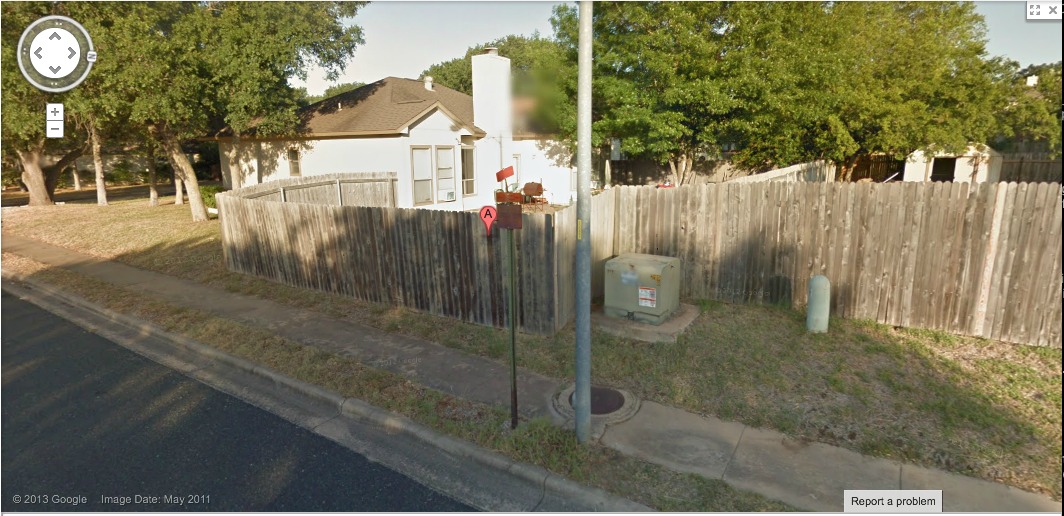
I read about a home that was broken into. As I read the details of the break-in, I got curious and went to Google Street View

Please understand, I’m not trying to scold or demean the homeowners. When I saw some other pictures of the result of the break-in, my heart sank. I can imagine the feelings of hurt, violation, anger, and then the realities of having to deal with the aftereffects. I wouldn’t wish that upon good people. What I wish to do is look at a few things and see what we can learn so we can all work to reduce our chances of being victims.

The essential details are that the break-in occurred during the day while the homeowners were at work. The burglars removed the window A/C unit, which then made for easy entry into the home. They ransacked the house. Unsure of exactly what they were looking for as “big ticket” typical theft items were not taken (one person suggested identity theft was the movie). So, at this point I don’t know what nor why things happened, but I’m not sure it matters much at this point. What we’re interested in here is what we can learn so we don’t become victims ourselves.

First, the break-in happened during the day on a weekday. While everyone talks about the breaking of glass in the middle of the night, that’s actually rare. Most break-ins happen during the day because that’s the most likely time 1. no one is home, 2. no neighbors are home.

Second, they pushed in the window A/C unit. I do not know the situation of this particular unit, but from what I can see in the picture, I’m not convinced the unit was secured. Having brackets not only support the weight of the unit, but they make it more difficult and cumbersome to remove the unit. Panels along the side, strong bars/dowels to keep the partially opened window from being slid further upwards. These are things that can make it more difficult.

Third, see in the foreground that power converter/transformer/box? I would not be surprised if that aided entry into the backyard. Hop on top of that, and it’s easy to hop over the fence. There’s nothing they can do about the box, nothing they can do to prevent access to the box. But, how about planting some big thorny holly bushes or cactus on the other side of the fence? Most people do look before they leap, and giving no clear and safe landing area can’t hurt you (but can hurt them).

It’s possible entry was gained into the backyard through the normal fence gate. I don’t know if the gate was padlocked in any way, but if not, padlocks are useful things.

Fourth, look in the backyard of the neighbor on the right. See the wide-open door on their shed? Granted, it’s possible when this picture was taken that homeowner was doing something and the doors are normally shut — it’s just a snapshot in time as the Google Streetview Car drove by. But still, consider the implications of sheds — which generally hold tools and other property that either can be directly used or easily sold for fair gain. Keep doors closed and locked.

It must be accepted that no home is truly secure. Our homes are made of sheetrock, wood, glass, and other easily broken materials. If someone wishes to gain access, the construction of our homes will not stop them. But consider most property crimes like this are crimes of convenience. The criminal doesn’t want to work hard (if they did, they probably wouldn’t be criminals in the first place). They want an easy target. The best you can do is work to make your home a difficult target. I mean, your home and the home next door both have tv’s, game consoles, jewelry, tools, and other desirable goods. If you make your home a more difficult target, if they’re going to have to work more or risk pain, problems, and hassle to get into your home, they’ll probably choose another home.

Lone Star Medics – Field & Tactical Medicine Conference 2014

Lone Star Medics is hosting a Field & Tactical Medicine Conference in Dallas, Texas on March 29-30, 2014.

Alas, I won’t be able to attend, but I wish I could. The lineup of presenters is impressive, and there’s no such thing as having too much knowledge about first aid and medicine.