2011-11-14 workout

“Week 4”

  • Deload – Deadlift (working max: 285#)
    • 2x5x115
    • 2x5x145
    • 2x5x175
  • Asst. #1 – Good Mornings
    • 5 x 10 x 65
  • Asst. #2 – Hanging Knee Raises
    • 5 x 5 x BW
  • Metcon – jump rope
    • 1 Tabata set – all single hop
  • Grip
    • 2x10xT, 2 sec hold
    • 3x3xS, 2 sec hold
    • 1 10 sec hold, No. 1

Again, deload week so nothing special. I did feel a bit nicer on my deadlift form, pulling more “back” than up, so that was cool. I need to keep working on getting my eyes up; they start focused a little too close to the ground, not the best for pulling.

Good Mornings I went deeper on. Let the stretch happen, and yes if it rounds the lower back a bit, that’s fine because I need the stretch. Thus, why I’m using such light weight. I went deeper today, felt like the bar was going to roll over my head, better stretch and by set 5 it felt better, so yeah…stretch is helping, work effort was better. In the interest of time today I supersetted it with the knee raises. I was doing sets of 5×8 but noticing I was peeding out those last 2 sets and not getting quality reps on the last reps so… that’s no good. Take a step back and let’s strive for 5×5 and make them all high quality, full intensity, knees curled up to my shoulders every rep. 5×5 worked well today for that. Since next cycle starts soon, I will probably go 5×6 for quality reps all the way through and see how that fares.

And yes, I have been thinking about the grip work. My current thinking? Let’s try for 2x a “week”. Since deadlift days are so grip intensive as it is, let that act as a “heavy” day. So deadlift, all the hanging raises work my grip well too, so then just continue with a “heavy” work set on my gripping like you see above. Warm up with the “light” gripper for a couple sets of a lot of reps, then work sets with the medium gripper for 3×3 or at most 3×5 across (maybe even going 5×5?), then one final set of hold with the heavy gripper. That plus the work I got during the lifting portion of the workout should be ample. Then on my squat day, I’ll do a “light” workout, probably something like 3×10 with the light gripper. And just try 2x a “week” with this sort of heavy/light alternating and see how it goes. Try this at least for 1 Wendler cycle.

Aiding my grip

Grip.

It’s important. You don’t get through the day without using your hands to hold onto something.

Sure a lot of the tasks in our modern world don’t require much grip strength, but like many things in life stronger is better… rare is the time when something is “too strong”, more often you run into the problems of “too weak”.

In shooting sports, especially with a handgun, grip strength matters when it comes to management of recoil.

When lifting heavy weights, grip strength matters.

I started having some issues with my left hand’s grip strength when deadlifting. Switching to mixed grip helped, but I still want to work on my grip. Granted, one of the best things is to ensure a rock solid grip when I do any of my lifting no matter the exercise… no letting my hands just hook onto the bar, grip the bar. But the other day I was browsing around the EliteFTS website and thought why not… I’ll get some grippers.

These aren’t your normal grippers that you can buy at the sporting goods store

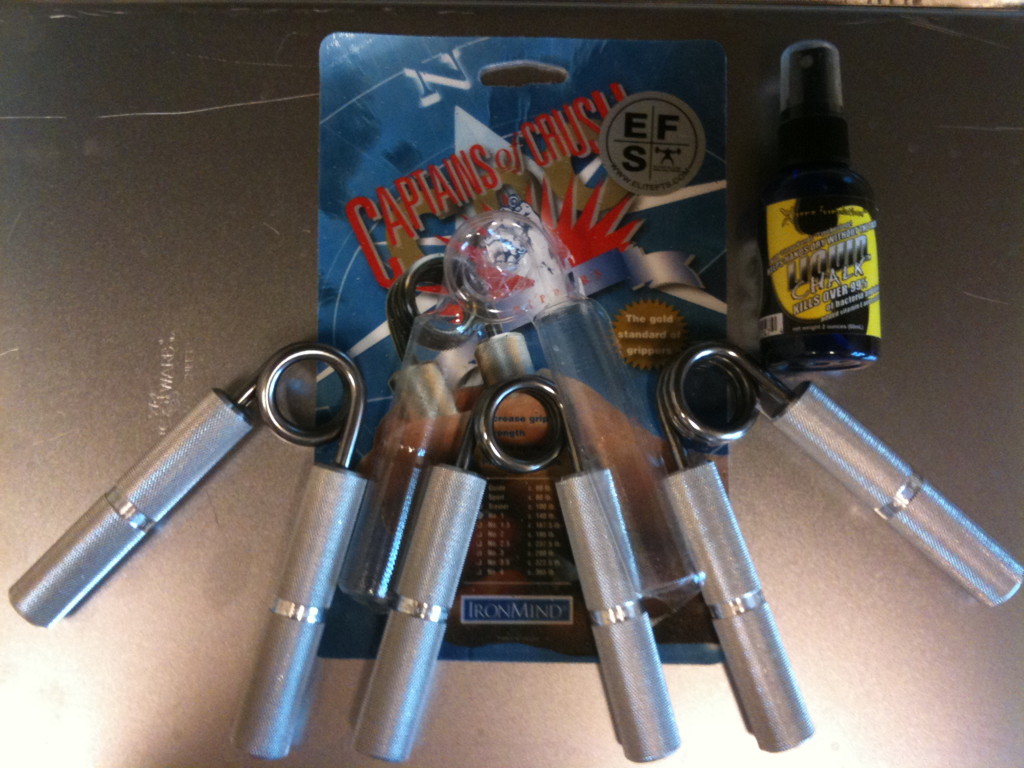
These are Captains of Crush hand grippers. They’re much higher quality and much more difficult to close. But how difficult depends, because they make a wide range of them.

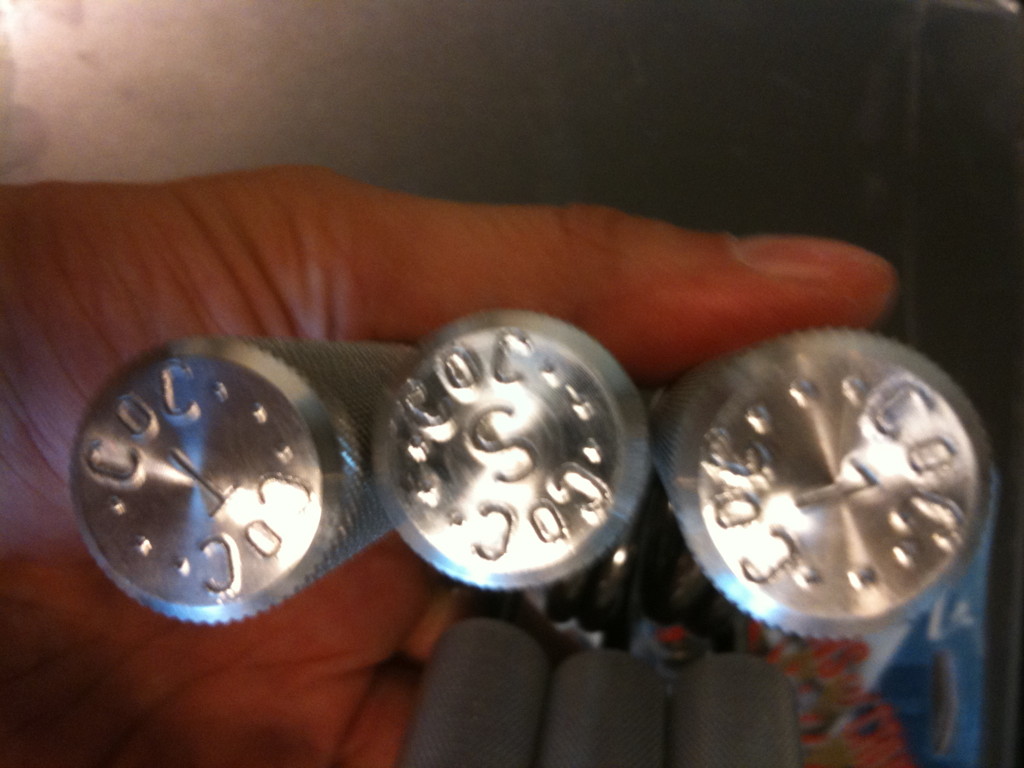
I picked up the Sport, Trainer, and No. 1. The Sport is the second in their lineup, rated at 80# of pressure to close. The Trainer is next in line, rated at 100#, and the No. 1 is next, rated at 140#. I really wasn’t sure where to start, so I figured to get all three, especially because that works progressively because hey… getting strong doesn’t mean squeezing a light weight for thousands of reps. It’s like any strength training: doing a 3×5 or 5×5 set with maximum intensity. Plus a little warm up.

I have no problems closing the Sport, and the Trainer I can close well enough to provide me my initial workout — this is my work load. The No. 1? With my right hand I can close it if I’m fresh and dig in. My left hand can’t fully close the No. 1.

There’s a lot to grip training, well beyond “crush strength”, but this is a reasonable start for me as something to add in. Plus, I’m not just going to crush but crush-and-hold. Grip isn’t just grabbing and letting go, but grabbing and holding. So any work I do will involve crushing and holding for a period of time. Exactly what my workouts here will be remains to be determined, but I figure it will be something I do on my way home from the gym… just stick the grippers in my bag and squeeze while I walk home. Multitasking. 🙂

We’ll see what difference, if any, it ends up making on my grip strength.

You may have noticed another thing in the first picture: Liquid Chalk. Purchased that on a whim, knowing nothing about it. I can’t use true chalk in my gym but hey, if I can have something to help my grip, great. Now, from shooting I know about Pistol Pro Grip but honestly I don’t like that stuff because it leaves a white residue/mess everywhere and I just don’t like how it makes my hands feel.. almost too dry, but no question it works. But that won’t fly in the gym since it leaves a mess. So this Liquid Chalk? We’ll see if it helps any. I have sprayed it a couple of times on my hands at home just to see what it does and it does leave a bit of a “dry” chalk-ish-like feel on your hands, but I’m not sure how well it will actually help. Plus, as I now read various reviews, it appears the spray clogs up pretty quickly. Hrm. We’ll see.

In the end, improving my grip is good. I see no downsides to it. We’ll see how well these products help.

on how to drop the slide

Gun bloggers are presently all a flutter about how to drop the slide on a semi-automatic handgun.

I think it started with Caleb and this “quote of the century” post. Actually no… it goes back further, to this thread on pistol-forum talking about a “tactical ninja kick” as a way to drop the slide (if you don’t know, don’t ask). Then Caleb’s post, where he was specifically trying to point out that the “it’s a fine motor skill” argument isn’t a valid one in this case (thumbing the slide lock vs. racking the slide) because they’re both fine motor skills. But IMHO the post wasn’t worded well and people thought he was bagging on the techniques, not the argument. So Caleb posted a follow-up article that went deeper into the issue. I think he still didn’t present the argument well enough — that he’s upset about the reasons put forth for justifying the technique, not the technique itself. But here we are. Heck, even KR got into it, with some very valid presentation.

Now, Shelley Rae posted to GunNuts about a recent failure she had during an IDPA match. The interesting part is that her slide stop/release broke. She normally thumbs that lever to get the gun back into the game faster, but it broke, she diagnosed the problem, reached over the top to drop the slide, and continued with the match.

And of course… this justifies everyone’s way as the best way, and everyone can take this as proof their way is right and best.

I’d like to take a different approach.

It depends.

(and I am talking about the techniques, not the “fine motor skill” justification because strictly speaking Caleb is right, they are both fine motor skills… I think tho what people mean isn’t the strict definition of fine vs. gross, rather that it is a more precise thing to thumb the lever, involving just your weak thumb vs. more body/muscle/parts involvement in reach and rack; but perhaps we’re splitting hairs).

Now personally, I’m biased towards the line of thinking that Karl puts forth because he’s my mentor and I spend a lot of time around him. But as for which technique one should use? I’ll put forth that it depends upon your goals and/or problem set and/or operational context.

You can’t serve two masters. So in weightlifting you can’t try to gain mass and lose fat: pick one, focus on it. I’d say the same applies here in gun work. What is your goal? Competition? Self-defense? Pick one, because you can’t serve two masters.

In competition, all that’s on the line is if you end up in the winner’s circle or not. Most action shooting sports have time as a critical factor, and the less time you take the better. Thus, techniques that allow you to be faster are generally more desirable. In this case, there’s no question that thumbing the slide lock/release is going to be faster than reaching over the top to drop the slide. This is going to be a more desirable technique for this context.

In self-defense, your life is on the line. Seconds still matter. So, one could say thumbing the slide lock/release is better. But will it always be? It’s cold out now… you have gloves on. Can you thumb it? You’re covered in blood. Can you thumb it? You lost your thumb, can you… well, no you can’t. When your life is on the line, you need things to not go wrong, you need things to go your way. It’s better for things to be “bulletproof” than “fast but risky”. Failure of the gun in a competition isn’t a big deal; failure of your gun or technique in a gunfight is a big deal.

Let’s go back to Shelley Rae’s video. Failure of the component is rare. 99.9% of her competition shooting will be better off thumbing the slide lock/release. So in the context of the game, something went wrong, she lost a few extra seconds to diagnose the problem, but she got it corrected and finished the match. Life goes on, all is fine. Now, let’s pretend the same video was of a gunfight. Those same few seconds where your brain is going WTF? your OODA loop is resetting, you have lost focus on the fight, not to mention she continued to move out from behind cover while dealing with the problem… what could that have cost her in a gunfight? Reaching over the slide she never would have noticed the problem and never would have had a WTF? moment; may have cost her 0.5 seconds more to do that technique always, but that’s a lot better than how things played out (again, pretending it wasn’t a match video).

I’ve been shooting the FAST drill because it’s a good drill. On that drill, 5 seconds is considered Expert and is a tough number to achieve. But to achieve that number, you’re going to have to use the slide stop/release to drop the slide because reaching over the top to drop the slide just takes longer, and the nature of the drill and limits of human ability just work out as they do. But for me? I’m fine with never breaking the 5 second barrier in that case, because I train primarily for self-defense thus my go-to technique is reaching over the top of the slide to drop the slide (no thumbing for me). Thus if the best I can ever do is 6 seconds, I’m OK with that because I know what master I am trying to serve.

There are reasons for each technique. They both have their strengths, they both have their weaknesses. They can be applicable to a wide range of situations, they may be more appropriate for one situation over another. So, instead of just saying “mine is right” or “mine is best” always, step back and examine what each technique brings to the table (good and bad). Weigh that against your context, be willing to accept the strengths and weaknesses, know and understand how to deal with them, and be sure you know what master are you serving. Work towards that end.
2011-11-11 workout

Today’s workout didn’t go to 11, since it’s the start of deload week.

“Week 4”

  • Deload – Press (working max: 130#)
    • 2x5x45 (warmup)
    • 2x5x55
    • 2x5x65
    • 2x5x80
  • Asst. #1 – Press
    • 5 x 10 x 60
  • Asst. #2 – Supinated grip lat pulldowns
    • 5 x 10 x 115
  • Metcon – jump rope
    • 1 Tabata set – 3 reps running in place, 5 single hop
  • Grip
    • 2x10xS, 2 second hold
    • 3x3xT, 2 second hold, last rep pf last set hold as long as possible

In past cycles, I’ve upped my assistance work during the deload week because with the work sets being so low I wanted to ensure I still got a reasonable workout. But, deload needs to be deload and I need to realize that the workouts won’t be all the stressing or impressive, but they are important to the long term. I need to stick to that and hold myself back.

So that said, the workout was nothing to write home about, but it felt good and probably what it should be. 🙂

Jump rope, I was a bit of fumble feet on the running in place so I only got 3 “reps” out, but it was good and useful and I just have to keep at it until I get it. The single-hops were at the same rope speed tho.

And you’ll notice something new. Grip work. It’s a weak point that became evident on my heavy deadlifts and leg raises, so I want to see if adding some specific grip work can help me out here. Yes, I ensure my grip doesn’t suck during any lift that needs it (i.e. no hooks, no barely holding on, have a firm closed tight grip), but if a little extra work can help, great. I picked up a set of Captains of Crush grippers, the Sport, Trainer, and #1. With effort I can get #1 to close with my right hand, can’t with my left, so that’s a good threshold for me. My general approach will be strength building, just like they tout on their website… not a zillion reps with an easy gripper, but working in that 3-5 rep range with progressively heavier resistance. I’ll do it on my walk home from the gym. Start with the Sport to warm up, crank out 2-3 sets of 10 reps, and every rep isn’t just a “close and open”, but a close (and close means the bottom tips of the handles touch), hold for at least 2 seconds (and that means the tips remain touching the whole time), then a controlled release and start again. I think a hold is important because grip isn’t touch and go, it involves holding. Then I’ll go up to the Trainer and do some lower rep sets, like today I just did 3×3, again holding in between reps and on the last rep of the last set holding as long as I can.

Is that the most intense grip workout? Probably not, but like all things, you have to start somewhere and it’s better to “start light” and work up to it. On non-obvious reality for me is I cannot work so hard that I get sore and cramped in my forearms and fingers because I have to type for a living and crippling myself that way does me no good. 🙂 So I shall start “light” and work my way up. I’m also not sure how often I’ll do this, probably once a “week” for now, but I could see bumping it to 2x week as I adapt. We’ll see. Just got them yesterday and am figuring out what to do with them.

The shit hits the farm

This just came in the Nov. 10, 2011 issue of the JBG Organic Farm newsletter.

I’ll just reprint the relevant section.

BTW, “biosolids” is just a bullshit “pretty it up” term for treated sewage sludge.

From the Farmer’s Perspective:

I wish I could say that the title of this newsletter didn’t have a literal meaning, but, unfortunately, this time, it really does.  A few weeks ago when I was driving out to River Road, I saw trucks from the City of Austin’s Hornsby Bend waste treatment plant dumping truckloads of biosolids onto the farm next to JBG.   After talking with the landowner, I found out that Hornsby Bend gave him the biosolids for free and also delivered and spread that material.  From my observation, it appears that the City of Austin applied around 100 truckloads of biosolids to this farmland.  Seeing this really upset me because applying biosolids can make land unusable for food production for years.  Given the shrinking availability of farmland in the area and the region’s increasing population, the City and the County should not be endorsing a policy that harms what little farmland remains.

After witnessing this being dumped and spread, I called the Texas Department of Agriculture (TDA) to find out about restrictions for organic farming on land to which biosolids have been applied.  Mary Ellen Holliman, Coordinator of Organics, and Richard De Los Santos, Coordinator for Horticulture, Produce and Forestry Marketing, told me that land to which biosolids have been applied cannot be certified organic for 3 years based on Federal law under the National Organic Program.  More importantly, they said that the Texas Commission on Environmental Quality (TCEQ) and the State of Texas have very stringent rules for producing crops for human consumption.  Biosolids are grouped into two classes based on hazard level, and depending on the classification, they thought it could be an up to 10 year wait before land applied with biosolids could be brought back into production for food crops.

I am also concerned that the City and County do not adequately enforce the required waiting period for growing food crops once biosolids have been applied.  It isn’t clear how food produced on land to which biosolids have been applied is kept out of the area food system.  In fact, there appears to be very little oversight, and as a farmer, I was even encouraged to use biosolids when I toured the facilities at Hornsby Bend.   At that time, I was offered biosolids for purchase for a fertilizer for my commercial vegetable farm.  I then did some research and found that I could not use this for food production under State and Federal law, and, therefore, did not purchase anything from the plant.  The staff at Hornsby Bend, however, did not tell me any of this despite knowing that I was a vegetable grower.  Instead, I had to do the research myself.

By allowing biosolids to be spread on area farms, the City and Travis County put valuable farmland out of commission for years and endanger the health of their citizens through lax oversight.  Instead, the City and County should adopt a policy that prohibits biosolids from being applied to farmland for food or hay crops.  Since witnessing the dumping of biosolids at the farm next to JBG, I have been trying to get the word out to other growers and the public about the current City and County policy.  I thank you for taking the time to read this, and I will keep you posted on any actions you can take in the future to help change this harmful practice.

It’s bothersome this stuff is being utilized as it is.

10 years is a mighty long time… that’s a lot of damage being done to the soil.

It’s more bothersome that, despite the use of sewage sludge being illegal for food production, the city agents offered it to him to use.

And the city is still doling it out.

Gee… and Austin touts itself as such a “green” city. Seems a little brown to me….

Watch and Learn

Dave Sevigny shooting some IDPA drills

Here’s some things we can learn:

  • Look at Dave’s forearms. Notice all the muscles? Yes, grip the gun hard.
  • When reloading, notice Dave brings the gun in, keeps it high, and his eyes shift to focus on what he’s doing (e.g. looking at the magwell).
  • When shooting on the move, knees are bent, feet are rolling. In addition, his lower body is oriented towards his end destination (hips square to it, toes pointed at it), his upper body then rotates like a turret to engage the targets. Doing this allows you to move quickly with less chance of tripping.
  • When shooting one-handed, the other hand doesn’t dangle. It’s in a well-defined location on his chest/torso.
  • Also when shooting one-handed, easiest to see when Dave is shooting with his left hand, notice the position of his thumb? Contrast this against the thumb(s) position when shooting two-handed. Yes, curl the thumb down, like making a fist; you’ll have a stronger grip.
  • To go fast, you have to move fast but also efficiently. Dave has no wasted motion.

2011-11-09 workout

“P” is for Personal Record (PR). “P” is for Prowler. “P” is also for puke. 🙂

“Week 3”

  • 5/3/1 – Squat (working max: 240#)
    • 2x5x45 (warmup)
    • 1x5x95
    • 1x5x120
    • 1x3x145
    • 1x5x180 (work)
    • 1x3x205
    • 1x5x230 (PR*)
  • Asst. #1 – Squat
    • 5 x 10 x 95
  • Asst. #2 – leg curls
    • 5 x 10 x 60
  • Metcon – Prowler
    • 90#, 4 40 yard sprints

Overall, today was good… even the fact that as I type this, I still feel like I’m going to drop dead. 🙂

The work set of squats felt good. I felt strong. I didn’t have any sort of mental issue. It was again a “squat, or squat not” sort of approach. In fact, as of Monday’s workout I actually tried to just not think about this workout as all. It will be whatever it will be, don’t think about it, don’t stress over it. And I think that helped.

During the final set, I did ask someone to spot me, just in case. I think that helped give me a little confidence that if in fact I did fail I’d be alright. And so I hit the bar, did 1x5x230. I consider that sorta a PR. It’s not truly because I have done 1x5x230 before, back during the PPNP stuff, but my form was horrible. My form is MUCH better now and it showed today. Sure there was some forward lean, it wasn’t 100% perfect, but it wasn’t the ridiculous struggle it was before. Plus, just getting back to this level is a bit of a win for me. So, it’s not technically a PR, but it’s progress. Now that I think about it, I should have went for 6 and made it more of a firm PR. Oh well, there’s always next cycle.

Assistance work was fine. I have been thinking tho, one thing I’ve been doing on my deload weeks is upping my assistance work so that it stresses me like all other weeks. I’m thinking no, don’t do that. Keep my assistance work as-is during deload and truly let deload be deload. I may not break much of a sweat, but that’s fine because it’s more about recouperation. I’ll bump when I start the next cycle.

No jump rope, because Mr. Prowler was there. Of course he’s been working every day on this and has worked himself up to 90# (2 45’s) on the prowler. Me? I haven’t, but I wasn’t going to let my situation interrupt his flow since he’s doing me the favor. I did figure however that it would kill me, and I wouldn’t get 10 sprints in, especially given all the heavy leg work I just did. So I did 4 40 yard sprints with 90# on the prowler. On run 3 I started to slow towards the finish line. On run 4 it was tougher still to finish up. I was sucking wind pretty hard afterwards, my glutes and adductors were screaming at me, and I felt like I was going to puke. 🙂 Didn’t, but I was sucking wind and sitting on a bench for at least a good 5 minutes just trying to recover. Heh. The walk home was weary. Right now my body is saying “go take a nap” because it wants to recoup. I think I just might do that.

Next up is deload. I want to take that rather seriously, really go light and easy tho let my brain focus on form. One form thing that I want to work on is breathing. I stumbled upon something today that I want to explore.

See, when I come up to the bar, I’m setting myself, getting my body in position, tightening things up, which includes the torso for the valsalva maneuver… so I suck in a big belly full of air, hold it, tighten up, get the bar unracked, get into position… and by then my head starts to feel kinda light or dizzy or whatever, and so when I take the first breath that just exacerbates the situation and it can make getting through the set difficult. Happens on any set, but is most noticeable on the heavier sets. Of course, that’s no good, and has been a source of some of my problems.

On the second to last work set of squats I came up to the bar, got under it, and didn’t take a big breath until I was lifting the bar off. It was like I was fully in position, then all at once I breathe, tighten the body, and unrack. That seemed to work a LOT better and my body responded better, no dizzy feeling or whatever. I attempted to do the same on my last work set, and didn’t quite get there, but it was better than normal. So I need to figure out the groove here. But I want to explore this more because it’s been a source of issue for me. A small technical detail, but makes a big difference.